
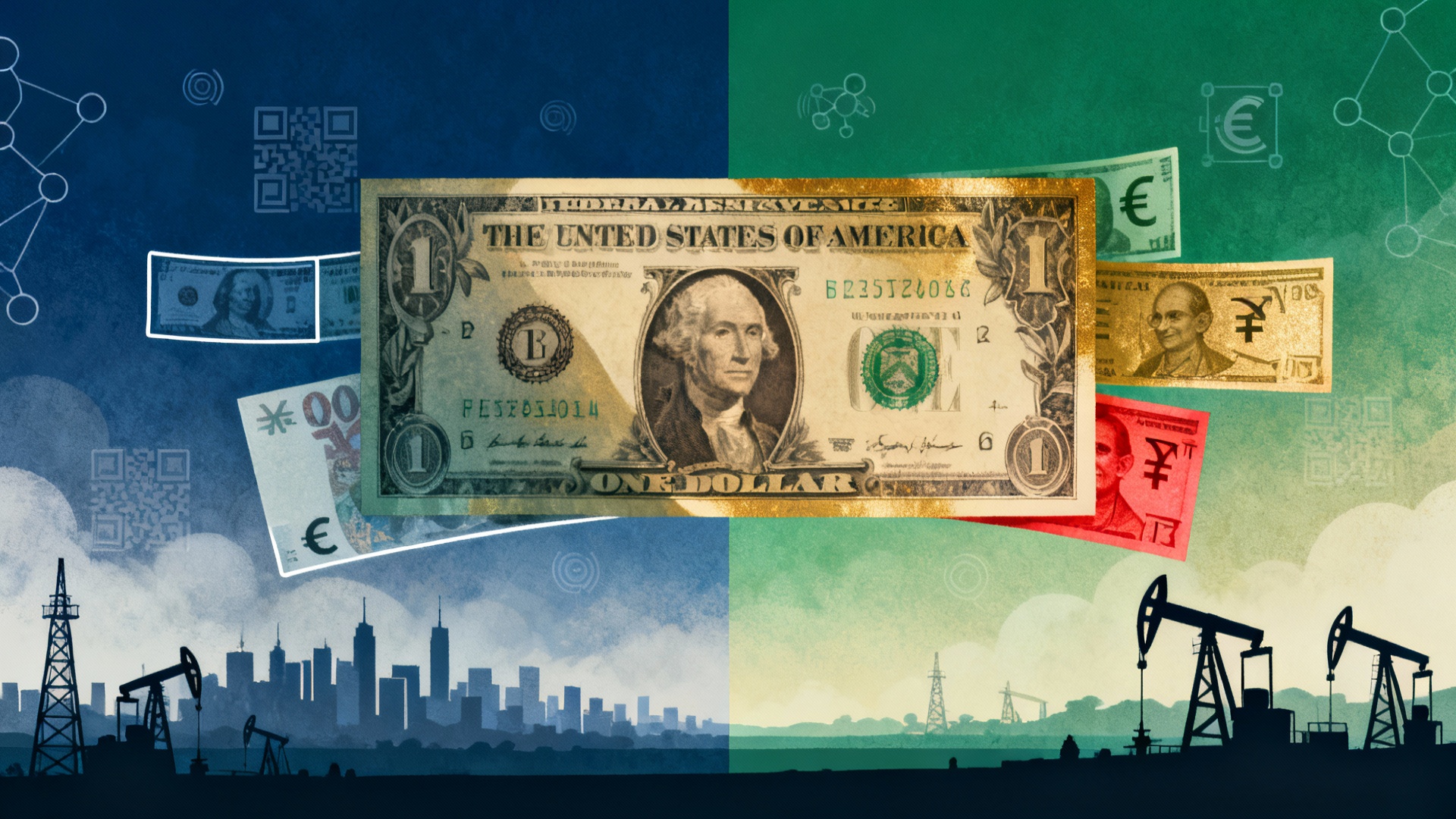
Have you ever wondered why the US dollar has been the world's go-to currency for decades? It’s a story wrapped in oil, power, and a secret agreement that shaped global economics for 50 years. But something changed quietly in June 2024 — the petrodollar agreement between the US and Saudi Arabia came to an end. What does this mean for your wallet, your savings, and the future of global trade? Let’s unpack this untold financial revolution together.
1. The Invisible Architecture: Understanding the Petrodollar System
Let’s pull back the curtain on a system that shaped your daily life, even if you never heard its name: the petrodollar. This “invisible architecture” was built quietly after the chaos of the 1973 oil crisis and the end of the gold standard, but it’s been the foundation of American financial power for the last 50 years. With the petrodollar agreement expiration in June 2024, it’s more important than ever to understand how this system worked—and how it made the U.S. dollar the world’s most wanted currency.
The Oil Crisis and the End of Gold
Picture America in the early 1970s. In 1971, President Nixon ended the gold standard, meaning dollars were no longer backed by gold. Suddenly, the dollar was just paper—no longer anchored by anything physical. Then, in 1973, the oil embargo hit. Gas lines stretched for blocks, prices soared, and the U.S. economy teetered. Policymakers realized two things: the country desperately needed oil, and the dollar needed a new anchor to keep its value and global trust.
Henry Kissinger’s 1974 Deal: The Birth of the Petrodollar
This is where the story gets interesting. In 1974, Secretary of State Henry Kissinger struck a deal with Saudi Arabia, the world’s largest oil exporter. The terms were simple but world-changing:
- Saudi Arabia agreed to sell oil only in U.S. dollars—no exceptions.
- In return, the U.S. promised military protection, advanced weapons, and political support.
This wasn’t just a trade agreement. It was a global reset. Because every country needs oil, and Saudi Arabia controlled so much of it, the entire world suddenly needed dollars to buy energy. This forced global demand for dollars, even though the U.S. had left the gold standard just three years before.
Artificial Dollar Demand: How the System Worked
Here’s how the petrodollar agreement created “artificial” demand for U.S. currency:
- Countries like Japan or Germany couldn’t buy oil in yen or marks. They had to get dollars first.
- To get dollars, they sold goods to the U.S. or traded with other countries for dollars.
- These dollars piled up in foreign central banks as reserves.
- With all these dollars, countries needed a safe place to park them—so they bought U.S. Treasury bonds, funding American government spending.
As a result, the U.S. could run massive deficits, print money, and still find eager buyers for its debt. As one analyst put it:
The Petro dollar system essentially gave the United States a credit card with no limit and no consequences.
How the Petrodollar Shaped Your Finances
This hidden system touched your life in ways you probably never realized:
- It kept interest rates low—because foreign countries kept buying U.S. Treasury bonds, demand stayed high and borrowing costs stayed low.
- It kept inflation in check—even as the U.S. printed trillions, the world absorbed those dollars, preventing runaway price increases at home.
- It made imports cheap—your electronics, clothes, and even groceries cost less because the dollar was strong and widely used.
Why Unlimited Deficits Didn’t Break the System—Until Now
Because of the petrodollar, the U.S. could finance wars, social programs, and bailouts without immediate backlash. Other countries had to balance their budgets and watch their currencies. The U.S.? It printed money, ran up a $35 trillion national debt, and the world kept buying. That’s the power of dollar dominance—and why the petrodollar agreement expiration is such a seismic shift. With Saudi Arabia’s exit, the invisible architecture is starting to crumble, and the demand for U.S. Treasury bonds is already showing signs of decline.
2. The Quiet End: Saudi Arabia’s Bold Dollar Exit in 2024
Imagine waking up to a breaking news alert: “The 50-year petrodollar agreement that underpinned America’s financial dominance has expired. Saudi Arabia is now selling oil in Chinese Yuan.” You’d expect chaos on Wall Street, emergency meetings in Washington, and headlines everywhere. But on June 9, 2024, when this actually happened, there was barely a whisper. Yet, this quiet moment marks the most significant shift in the global financial system in decades.
June 9, 2024: The Petrodollar Era Officially Ends
On this date, Saudi Arabia chose not to renew its historic agreement with the United States. For half a century, this deal required Saudi oil to be sold exclusively in US dollars, forcing the world to hold dollars for energy purchases. This arrangement let America run trillion-dollar deficits and print money with few immediate consequences. Now, that foundation is gone, and the silence surrounding it is almost surreal.
Saudi Arabia Breaks Dollar Exclusivity
The shift didn’t just happen on paper. In March 2024, Saudi Arabia completed its first major oil transaction with China in Yuan—a deal worth over $100 million. This wasn’t a test or a symbolic gesture. It was a clear signal: the world’s largest oil exporter is no longer restricting sales to dollars. This move, unthinkable just a few years ago, marks the start of a new era in global currency diversification.
New Payment Networks: Embridge Goes Live
Saudi Arabia didn’t stop at a single deal. They joined the Embridge payment system alongside China, Thailand, and the UAE. This digital platform allows instant, cross-border oil trades in local currencies, completely bypassing the dollar and legacy systems like SWIFT. Now, Saudi oil can be bought with Yuan, Dirham, or Baht—no dollars needed. This is the technical backbone for a world where the dollar is no longer king in energy markets.
Geopolitical Realignment: The BRICS Factor
Saudi Arabia’s interest in joining BRICS—the economic alliance of Brazil, Russia, India, China, and South Africa—signals a major geopolitical shift. BRICS now represents over 40% of the world’s population and about 35% of global GDP. If Saudi Arabia joins, it would cement a new power bloc determined to reduce dollar dominance in global trade and finance. At the 2024 BRICS Summit, Saudi officials made it clear: “We are open to trade in multiple currencies and see no reason to be constrained to any single currency.”
Dollar Dominance in Oil: The Decline Accelerates
The numbers tell the story. In 2023, about 80% of global oil settlements were in dollars. By early 2025, that share had dropped to 68%. That’s a 12-point decline in just two years—hundreds of billions in lost demand for the dollar. This isn’t just a Saudi story. Russia and China now settle nearly all their energy trade in their own currencies. The UAE has doubled its non-dollar settlements. Even France has bought LNG from China in Yuan. The trend is clear: global currency diversification is accelerating, and the dollar’s grip on oil is slipping fast.
If the News Reported This Loud and Clear…
Imagine if every American saw this headline: “Saudi Arabia Ends Dollar-Only Oil Sales—Global Demand for Dollars Plunges.” The shock would be immediate. Mortgage rates, car loans, and the cost of everyday goods would all be at risk. Yet, most people have no idea this is happening. The quiet end of the petrodollar era is already reshaping the world, and it’s happening faster than anyone expected.
3. The Ripple Effect: Global Currency Diversification and Economic Consequences
What’s happening right now with global currency diversification is nothing short of historic. For decades, the U.S. dollar was the world’s default for international trade—especially for oil. But since Saudi Arabia’s quiet exit from the petrodollar agreement in June 2024, the world is rapidly moving away from dollar-only deals. This shift is already sending shockwaves through the global economy and right into your wallet.
Countries Bypassing the Dollar: The New Normal
Let’s start with the facts. Countries like Russia, China, India, and the UAE are now conducting more trade in their own currencies. Russia and China, for example, now settle about 90% of their trade in rubles and yuan—almost completely cutting out the dollar. India’s rupee-ruble payment system lets them buy Russian oil without touching U.S. currency. Even France, a founding NATO member, settled a major LNG deal with China in yuan in 2023. These aren’t just symbolic moves; they’re a clear sign that the world is diversifying away from the dollar and building alternative systems.
Declining Demand for U.S. Treasury Bonds
This shift has a direct impact on U.S. Treasury bonds demand. For years, foreign central banks bought trillions in U.S. Treasuries to hold dollar reserves for oil purchases. But as they no longer need as many dollars, they’re selling off those bonds. According to U.S. Treasury data, foreign holdings of Treasuries dropped by over $200 billion from 2023 to 2025. China’s Treasury holdings alone have fallen to their lowest level since 2009. As one analyst put it,
“The Treasury death spiral is in its early stages as foreign demand for US bonds weakens.”
With fewer foreign buyers, the U.S. government has to offer higher interest rates to attract new investors, which means higher borrowing costs across the board.
Inflation and Interest Rates: The Cost of a Weakening Dollar
As global demand for dollars drops, the value of the dollar slips. That means everything we import—phones, clothes, food, fuel—gets more expensive. The numbers tell the story: central bank dollar reserves have dropped from 59% in 2021 to 54% in 2024. This is a clear sign of accelerating de-dollarization. When the dollar weakens, inflation rises. And when foreign investors demand higher yields on Treasuries, interest rates on mortgages, car loans, and credit cards all go up. If you’re wondering why your mortgage rate is suddenly higher or why your credit card bill is growing, this is a big part of the reason.
How This Hits Home: Rising Prices for Everyone
You might not see headlines about global currency diversification, but you’re probably feeling it at the checkout line. I noticed it myself just last week. My usual grocery run cost about $20 more than it did a few months ago. Eggs, bread, and even basic produce—all creeping up in price. It’s not just inflation in the abstract; it’s the real-world result of a weaker dollar and higher import costs. The same goes for gas prices at the pump, which are more volatile as the dollar loses its grip on oil markets.
Economic Consequences: What’s at Stake
- Higher borrowing costs: As foreign demand for U.S. Treasury bonds falls, interest rates rise, making mortgages, car loans, and business borrowing more expensive.
- Persistent inflation: With a weaker dollar, imported goods cost more, driving up prices for everyday essentials.
- Pressure on savings and investments: Rising rates can hurt the stock market and reduce the value of retirement accounts.
These aren’t distant threats—they’re already unfolding. As more countries diversify their currency reserves and trade outside the dollar, the economic consequences of dollar depreciation are landing right on your doorstep. The silence from politicians and the media doesn’t change the reality: the world is moving on from the petrodollar, and the ripple effects are just beginning to hit home.
4. Security Shift: Saudi Arabia’s Military Realignment Away from the US
If you thought the end of the petrodollar agreement was just about oil and currency, think again. The real story is just as much about tanks, drones, and shifting alliances as it is about dollars and deficits. For fifty years, the petrodollar system was more than a financial arrangement—it was a security pact. The United States guaranteed military protection for Saudi Arabia, and in return, the Saudis kept oil sales locked to the dollar. Now, with the Saudi Arabia dollar exit, that military guarantee is fading fast, and the kingdom is building new security partnerships that could reshape the entire Middle East.
Saudi Arabia’s Surging Military Purchases from China
One of the clearest signs of this shift is in Saudi military purchases from China. According to the Stockholm International Peace Research Institute, Saudi imports of advanced Chinese military equipment have skyrocketed by over 400% since 2020. We’re not talking about spare parts or basic gear—these are sophisticated armed drones, missile technology, and surveillance systems. These are the same types of weapons the Saudis used to rely on the US for, but now they’re coming from Beijing. This is a direct signal that Saudi Arabia no longer sees the US as its only—or even primary—security partner.
Joint Drills with Russia: New Alliances in the Persian Gulf
It’s not just about buying weapons. In 2023, Saudi Arabia and Russia held joint naval exercises in the Persian Gulf. This was unthinkable just a few years ago. The US Navy has long been the dominant force in these waters, protecting shipping lanes and deterring regional threats. Now, Saudi warships are training alongside Russian forces, sending a clear message that the kingdom is open to new alliances. This isn’t just a military drill—it’s a public demonstration that the old rules no longer apply.
China Brokers Peace: Saudi-Iran Détente
Perhaps the most dramatic sign of this global financial shift is the normalization of relations between Saudi Arabia and Iran, brokered by China in 2023. For decades, the US justified its military presence in the region as a bulwark against Iranian influence. But when China stepped in to negotiate peace between these two rivals, it showed that American power is no longer the only game in town. As one analyst put it, “Saudi Arabia exiting the dollar system is directly connected to exiting American military dependence.”
Why Security Was Always Tied to the Petrodollar
It’s important to understand why military security and the petrodollar were always linked. The US didn’t just want Saudi oil sold in dollars—it needed to guarantee the kingdom’s survival to keep the system stable. That’s why America built bases, sold billions in arms, and provided intelligence support for decades. In return, the Saudis kept the oil flowing and the dollars circulating. Now that the petrodollar agreement has expired, Saudi Arabia is free to diversify both its currency and its security arrangements.
Implications for Global Stability and US Influence
This realignment isn’t just a Saudi story—it’s a global one. As Saudi Arabia reduces dependence on US military protection and strengthens ties with China and Russia, the traditional petrodollar security arrangement is unraveling. This could mean:
- Less US leverage in the Middle East, making it harder to shape outcomes or protect interests.
- More room for Chinese and Russian influence—not just in arms sales, but in diplomacy and regional security.
- Potential for new alliances that could redefine the balance of power in the region.
My thought: This could redefine Middle East politics, and it’s happening quietly. The petrodollar era tied America’s economic dominance to its military reach. Now, as Saudi Arabia exits both, the world is witnessing a silent but seismic shift in global power—and most people aren’t even aware it’s happening.
5. The Coming Phase Four: What Happens When Oil Fully Delinks from the Dollar?
Imagine the U.S. dollar as a mighty castle, standing tall for decades because it’s been built on a rock-solid foundation: the world’s need to use dollars to buy oil. But as we enter Phase Four of the phases of petrodollar decline, that foundation is about to be yanked away. The timeline? All signs point to 2026-2027, when alternative payment systems for oil are expected to be fully operational. This is when oil pricing will be completely delinked from the U.S. dollar—and things are about to get shaky for every American.
2026-2027: The Dollar’s Forced Demand Collapses
For fifty years, countries had to hold huge amounts of dollars just to buy oil. That “forced demand” kept the dollar strong, even as the U.S. printed trillions and racked up $35 trillion in national debt. But with Saudi Arabia and other oil giants now building and joining alternative systems—like the BRICS oil benchmark and the Embridge digital currency platform—this demand is set to vanish. Once oil can be traded in Yuan, Rubles, Rupees, or even a gold-backed BRICS currency, the world’s need to stockpile dollars for oil purchases will evaporate almost overnight.
Cascading Effects: Inflation and Interest Rates Surge
So what happens when the world stops needing dollars for oil? The answer is simple but devastating: the dollar weakens. When demand drops but supply stays high (thanks to years of money printing), the value of the dollar falls. This triggers a chain reaction across the economy:
- Import Costs Skyrocket: The U.S. imports nearly $4 trillion in goods each year. A weaker dollar means everything from iPhones to groceries to gasoline gets more expensive. Expect a 20% drop in the dollar’s value to add $800 billion to our annual import bill—costs that hit your wallet directly.
- Rising Borrowing Costs: Foreign buyers, no longer needing dollars, will dump U.S. Treasury bonds. To attract new buyers, the U.S. will have to offer much higher interest rates. Mortgage rates could jump from 6% to 10% or more, pushing monthly payments on a $400,000 loan from $2,400 to over $3,500. Credit card and car loan rates will also soar.
- Stock Market Volatility: Higher interest rates make borrowing more expensive for businesses, which usually leads to falling stock prices. Standard models suggest a 30-40% drop in major indices if Treasury yields double.
- Persistent Inflation: As the dollar loses its special status, inflation could run at 10-15% annually for several years, slashing your purchasing power in half within five years.
When the dollar loses its special status, your wealth takes a devastating hit.
How to Prepare for the Economic Consequences of Dollar Depreciation
With Phase Four approaching, you have a 12-18 month window to adapt. Here’s how to brace for the coming storm:
- Reduce Exposure to Long-Term Treasuries: Rising rates will crush bond prices. Shift to shorter-term assets or inflation-protected securities.
- Own Physical Gold: Gold historically surges when reserve currencies weaken. It’s a safe haven during currency transitions.
- Diversify Globally: Consider foreign stocks, especially in countries benefitting from the new oil payment systems.
- Explore Digital Assets: Bitcoin and other decentralized assets can offer protection as trust in fiat currencies erodes.
- Build Non-Dollar Income Streams: If possible, earn or save in stable foreign currencies to hedge against dollar decline.
Think of this transition as your financial castle losing its foundation. The cracks are already showing, and the tremors will only intensify as oil fully delinks from the dollar. Understanding the phases of petrodollar decline isn’t just financial trivia—it’s the key to protecting your wealth as the world’s monetary order shifts beneath your feet.
6. Navigating the New Financial Reality: Strategies for Protecting Your Wealth
Diversify Beyond Dollar Assets: Your First Line of Defense
With the petrodollar era quietly ending, your old playbook for investing and saving needs a serious update. The most important thing you can do right now is diversify your holdings beyond traditional dollar-denominated assets. If you’re heavily invested in U.S. stocks, bonds, or cash, you’re exposed to the risks of a falling dollar and rising inflation. Diversification isn’t just a buzzword—it’s your shield. Consider allocating part of your portfolio to assets that don’t depend on the dollar’s global dominance.
Physical Gold Investment Benefits: The Timeless Safe Haven
When currencies wobble, gold shines. Physical gold has always been a reliable store of value during currency transitions and financial upheaval. Unlike paper assets, gold isn’t someone else’s liability—it’s universally recognized and holds value even when trust in governments or banks erodes. If the dollar weakens, gold typically rises. Many central banks are already increasing their gold reserves, and you can do the same on a personal scale. Remember: “In times of financial upheaval, those prepared with diversified assets thrive.”
Bitcoin and Crypto: The New Alternative Currency
Interest in cryptocurrencies, especially Bitcoin, is surging as faith in fiat currencies wanes. Bitcoin is borderless, decentralized, and not tied to any one government’s policies. It’s become a digital alternative to gold, offering a hedge against both inflation and currency devaluation. While crypto markets are volatile, holding a small allocation can act as insurance if the dollar’s decline accelerates. Many investors now see Bitcoin as a core part of their “currency transition” investing strategies.
Energy Stocks in Foreign Currencies: Riding the Global Shift
As oil and gas transactions move away from the dollar, energy companies based in countries with strong or rising currencies could benefit. Look at Canadian, Norwegian, or even select Middle Eastern energy firms that earn revenue in currencies other than the dollar. Investing in these energy stocks tied to foreign currencies gives you exposure to global demand for oil—without being fully exposed to the risks of a weakening dollar. This is a growing trend as more investors seek opportunities outside the traditional U.S. dollar framework.
Stay Informed: Geopolitics and Financial Shifts Matter
The world is changing fast. Saudi Arabia’s dollar exit, China’s new payment systems, and the rise of BRICS all impact your financial future. Make it a habit to follow global financial news, not just headlines from Wall Street. Understanding these shifts will help you make smarter decisions and avoid being blindsided by sudden changes in currency values or interest rates.
Retirement Portfolios: Know the Risks of Dollar Decline
If your retirement savings—401(k), IRA, or pension—are mostly in U.S. assets, you’re at risk if the dollar loses value quickly. Higher inflation and interest rates can erode your purchasing power and shrink the real value of your nest egg. Talk to your advisor about adding international stocks, precious metals, or alternative assets to your retirement mix. Being proactive now can help preserve your wealth for the long haul.
Wild Card: Imagine a Day Without Dollar Dominance
Picture waking up and finding the dollar’s value has dropped overnight. Imported goods—phones, clothes, even groceries—cost 20% more. Gas prices spike. Your mortgage rate jumps, and your 401(k) takes a hit. This isn’t science fiction; it’s what happens when global demand for the dollar collapses. The first thing you’d notice? Everyday life gets more expensive, fast. That’s why preparing now is so critical.
In times of financial upheaval, those prepared with diversified assets thrive.
7. Wild Card: The Untold Story Behind the Silence on the Petrodollar Expiration
Something extraordinary ended in June 2024—the Petrodollar agreement expiration. This should have dominated every financial headline in America. Instead, there was a deafening silence. No breaking news, no emergency broadcasts, no congressional hearings. The foundation of American financial dominance quietly slipped away, and most people didn’t even know it existed, let alone that it was gone. Why?
The answer is unsettling, but it’s important to face it head-on. The financial media, which should be sounding the alarm about this global financial shift, has chosen to stay quiet. It’s not just an oversight. It’s a deliberate information blackout. As one observer put it,
This is the kind of information blackout that happens when the truth is too dangerous to acknowledge publicly.
Why would the media, politicians, and central bankers all go silent on something so historic? The reason is fear. Admitting the Petrodollar agreement expiration would mean admitting that the era of printing money without consequences is over. It would mean acknowledging that the United States can no longer count on the world’s forced demand for dollars to keep our economy afloat. That kind of news could trigger panic—on Wall Street, in Washington, and in households across the country.
Behind the scenes, central banks and governments are not ignoring this shift. They’re moving assets, diversifying reserves, and preparing for a world where the dollar is just another currency. But they’re not telling you where the money is going. They’re not explaining what it means for your savings, your mortgage, or your job. Instead, they hope that by keeping quiet, they can manage the transition without sparking a crisis.
But there’s a real danger in this approach. When the truth is hidden, people can’t prepare. An information blackout doesn’t prevent a crisis—it just makes it more likely that ordinary people will be blindsided when the consequences hit. The silence around the Petrodollar’s expiration isn’t just a missed news story. It’s a risk to public trust and democratic accountability. If the public isn’t told what’s happening, how can we hold leaders accountable for the decisions they make?
Imagine how different things could be if there was real transparency. If the media explained what the Petrodollar system was, why it mattered, and what its end means for your daily life, people could prepare. Communities could adapt. Investors could make informed choices. Most importantly, trust in our institutions could be preserved, even in the face of uncertainty.
Personally, I believe that informed communities are resilient communities. When people know the truth, they can adapt, innovate, and support each other through upheaval. The end of the Petrodollar era is a massive global financial shift, but it doesn’t have to be a disaster—if we face it together, with open eyes and honest conversation.
History will judge this moment. Decades from now, people will look back and ask: Did we learn from the silence? Did we demand transparency and accountability? Or did we let fear and secrecy shape our future? The Petrodollar agreement expiration marks the end of an era, but it’s also a chance for a new beginning—one built on knowledge, preparedness, and the power of community. The choice is ours. Let’s make it wisely.
TL;DR: The petrodollar deal that backed US financial dominance expired in June 2024 as Saudi Arabia abandoned dollar exclusivity in oil sales. This triggers a global shift away from the US dollar, leading to potential inflation, higher interest rates, and increased borrowing costs in America. Alternative currency systems and alliances like BRICS are rising, signaling a new financial era where the dollar no longer reigns supreme. Understanding this transition could help you safeguard your wealth.



0 Comments