
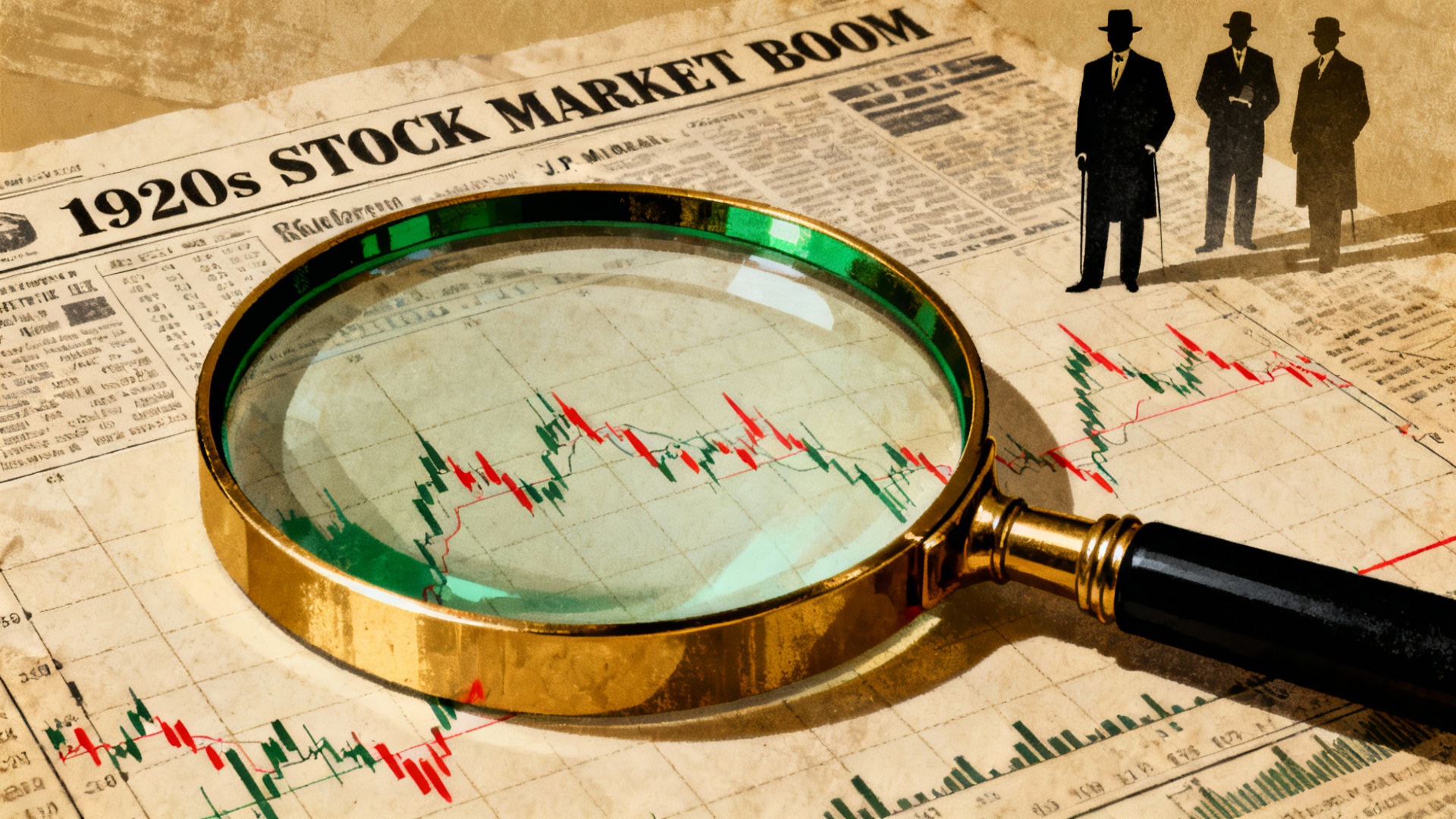
Imagine standing in Wall Street’s marble halls in 1929, noticing some of the richest men quietly selling their shares while headlines scream market highs. Were they clairvoyants, or simply recognizing a pattern repeating every few years? Hi, I’m your guide through history’s most revealing financial cycles where insider selling wasn’t about secrecy but about understanding Federal Reserve credit tightening—something you can learn to spot yourself.
The Mystery Behind Insider Selling: What It Really Means
When you hear about billionaire investors quietly selling off massive stock holdings, it’s easy to imagine secret meetings, whispered tips, or even illegal activity. But the real story behind insider selling patterns—especially before historic crashes like 1929—is far more practical, and it’s something you can learn to recognize yourself.
Rockefeller’s $15 Million Move: More Than Luck
Let’s start with a headline moment: In September 1929, John D. Rockefeller Jr. quietly liquidated $15 million in stocks. That’s about $268 million in today’s dollars. Just six weeks later, the market collapsed by 25% in two days. Was this luck, illegal insider knowledge, or something else entirely?
Here’s the truth: Rockefeller wasn’t acting on a hunch. He and his advisors were watching the same public information available to anyone. They saw the Federal Reserve raising interest rates, credit tightening effects rippling through the market, and margin debt ballooning to $8.5 billion—nearly 20% of GDP at the time.
“They were reading the same information available to anyone who cared to look.”
Between June and September 1929, the Rockefeller family’s private office reduced equity exposure from 65% to just 23%. This wasn’t panic selling. It was a calculated response to Federal Reserve interest rates and the unmistakable signs of credit tightening.
Inside the Marble Halls: J.P. Morgan’s Quiet Retreat
Picture August 1929: The Dow Jones is at a record high, newspapers are shouting “Prosperity Permanent,” and Wall Street is buzzing. But inside the marble halls of J.P. Morgan & Company, something different is happening. The bank’s senior partners are methodically selling, not dumping everything at once, but quietly reducing their equity positions by 40% between August 1 and September 30.
Internal records revealed decades later that 17 of the bank’s 18 partners reduced their personal equity holdings by an average of 42% during August 1929. Combined, they sold about $47 million in stocks—roughly $840 million today.
Again, this wasn’t about secret tips. These insiders were tracking two critical metrics:
- Margin debt—which had hit unsustainable highs
- Federal Reserve policy—which had tightened credit four times since January 1928
They recognized a pattern that repeats throughout financial history: expand credit, inflate assets, tighten credit, and watch everything reverse.
Kennedy’s Shoe Shine Moment: Peak Retail Euphoria
Joseph P. Kennedy, future patriarch of the Kennedy dynasty, had his own “aha” moment in July 1929. When his shoe shine boy started giving him stock tips, Kennedy didn’t panic—he did the math. Retail euphoria had reached service workers who’d never invested before, a classic sign that credit expansion had peaked and there was no one left to buy.
Between July 15 and August 30, Kennedy sold about $3 million in stocks (about $53 million today). His timing was no accident. On August 9, 1929, the Federal Reserve Bank of New York raised its discount rate to 6%—the highest since 1921. This was public knowledge, but few understood its significance.
“Federal Reserve credit tightening, after years of expansion, inevitably reverses wealth flows.”
Kennedy wasn’t predicting the crash. He was reading Federal Reserve interest rates and recognizing the effects of credit tightening.
Insider Selling Patterns: Not Magic, Just Pattern Recognition
So, what does insider selling really mean? It’s not about crystal balls or secret government cables. It’s about recognizing the signs of credit cycles and understanding how Federal Reserve policy shapes the market. These insiders responded to data, not rumors. They saw the writing on the wall because they understood the cyclical nature of credit and asset prices.
Next time you see headlines about billionaire sell-offs, remember: the real mystery isn’t about secret information. It’s about reading the signals—especially Federal Reserve interest rates and credit tightening effects—that are hiding in plain sight.
Credit Cycles History: Boom, Bust, Repeat
When President Woodrow Wilson signed the Federal Reserve Act into law on December 23, 1913, most Americans had no idea how much it would shape their financial futures. The promise was stability—no more wild banking panics. But what really happened was the creation of a system that would drive credit cycles history: a repeating pattern of boom, bust, and repeat, all powered by the Federal Reserve’s control over credit and interest rates.
How the Federal Reserve Sets the Cycle
Let’s break it down simply. The Federal Reserve manages the flow of money in the economy using two main levers:
- Reserve Bank Credit (the Fed’s balance sheet): This is the total amount of money the Fed pumps into the banking system by buying or selling government bonds.
- Interest Rates: The cost of borrowing money. Lower rates make borrowing cheap; higher rates make it expensive.
When the Fed expands credit—by buying bonds and lowering rates—money floods into the system. This new money chases returns, inflating the prices of stocks, real estate, and other assets. When the Fed contracts credit—by selling bonds and raising rates—money drains out, and asset prices fall. It’s a cycle as predictable as the tides and just as unstoppable once it begins.
Expand for 4 to 8 years, contract for 1 to 3 years, repeat.
Credit Expansion: The Boom
Every cycle starts with a period of easy money. The Fed lowers rates and expands its balance sheet, making credit cheap and plentiful. This fuels asset bubbles—stocks soar, home prices climb, and everyone feels richer. But this expansion can’t last forever.
Credit Contraction: The Bust
Eventually, the Fed gets worried about inflation or overheating markets. It reverses course, raising rates and shrinking its balance sheet. Credit becomes expensive, borrowing slows, and asset prices tumble. This is when the bust hits, wiping out the gains of the boom.
Historical Examples: The Pattern Repeats
- 1920 Post-WWI Crash: After World War I, the Fed expanded Reserve Bank credit from $2.5 billion to $6.2 billion—a 148% jump. The Dow Jones soared 48%. But in June 1920, the Fed hiked rates to 7%. By August 1921, the Dow had crashed, erasing all those gains. Notably, J.P. Morgan Jr. cut his firm’s stock exposure by 38% just before the reversal, showing how insiders track these cycles.
- 1969 Rate Hikes: In the 1960s, Reserve Bank credit grew from $39 billion to $54 billion. The Fed then raised rates from 4.5% to 9.19%. The S&P 500 peaked at 108 in 1968, then plunged 36% by 1970. Insider selling exploded: executives at the 50 largest companies sold $847 million in stock—340% more than the year before. The Walton family (Walmart founders) sold 22% of their holdings at the top.
- 2000 Tech Bubble: From 1995 to 1999, Fed credit expanded from $458 billion to $607 billion. Margin debt doubled. The Nasdaq hit 5,048 in March 2000. As the Fed raised rates, tech stocks collapsed 78% by 2002. Executives at Microsoft, Oracle, Cisco, and Intel sold $17.3 billion in stock right before the crash. Larry Ellison (Oracle) sold $4.3 billion; Jeff Bezos (Amazon) sold $1.8 billion. While talking up the “new economy” on TV, they were quietly cashing out.
- 2007 Housing Crash: Home prices soared 63% in the years before the Fed began raising rates. When credit tightened, the housing bubble burst, triggering the Great Recession.
- 2020-2022 Pandemic Cycle: The Fed’s balance sheet exploded from $4.2 trillion to $8.9 trillion—its fastest expansion ever. Asset prices soared, but the cycle’s end is always the same: contraction and correction.
Insider Selling: The Telltale Sign
One of the most reliable signals of a cycle peak is a surge in insider selling. Executives and billionaires don’t need to predict the future—they just watch the Fed’s moves. When credit expansion reaches extremes and the reversal begins, they sell. It’s not genius; it’s a basic understanding of Federal Reserve policy impact and stock market trends.
It’s as predictable as the tides and just as unstoppable once it begins.
How Insider Selling Patterns Signal Market Shifts
If you want to understand how the wealthiest investors protect themselves before a market downturn, you need to look at insider selling patterns. These are not random events. Instead, they are closely tied to Federal Reserve credit cycles and serve as powerful signals for major market shifts. By studying these billionaire stock sell-offs, you can learn how sophisticated capital uses historical knowledge and wealth management strategies to stay ahead of the curve.
Historical Patterns: Insiders Move Before the Masses
Let’s start with a few eye-opening examples. In 1929, right before the infamous stock market crash, J.P. Morgan partners quietly sold off 42% of their holdings. They weren’t guessing—they were responding to tightening credit conditions and a Federal Reserve policy shift. Fast forward to 1969, and you’ll find the Walton family, founders of Walmart, selling significant shares as the Fed tightened credit, mirroring the same cycle. These early moves weren’t about panic; they were about pattern recognition.
- 1929: J.P. Morgan partners sold 42% of stock holdings before the crash.
- 1969: Walton family’s Walmart sell-off aligned with credit tightening.
- 2000: Tech leaders like Larry Ellison and Jeff Bezos sold billions in stock before the dot-com bubble burst.
- 2007-2008: Wall Street CEOs, including Lloyd Blankfein (Goldman Sachs), Jamie Dimon (J.P. Morgan), and Richard Fuld (Lehman Brothers), sold millions in shares before the housing crisis—while some firms even shorted mortgage securities.
These moves were not based on secret information. As one market observer put it:
Sophisticated capital knew exactly what would follow, not because they could see the future but because they'd studied the past. They know how it ends.
Insider Selling Spikes Before Major Corrections
Tracking insider selling since 1969 reveals a clear pattern: executive sell-offs spike dramatically before major market corrections. For example, insider sales jumped to $847 million in 1969, soared to $17.3 billion in 2000, and reached $50 million (Goldman Sachs), $11.7 million (J.P. Morgan), and $84 million (Lehman Brothers) just before the 2007-2008 crash. These sales consistently happen after extraordinary gains and just before the Federal Reserve shifts from easy money to credit tightening.
During the 2020-2022 “everything bubble,” billionaire stock sell-offs hit new highs. Elon Musk sold $16.4 billion in Tesla shares, Jeff Bezos unloaded $13.4 billion in Amazon stock, and Mark Zuckerberg sold $4.4 billion in Meta shares. These moves came as the Fed expanded its balance sheet at record speed and then began raising rates. The S&P 500 peaked in January 2022, then dropped 25% by October. The insiders had already moved.
2024: The Pattern Repeats
The pattern is repeating in 2024. Between January and November, billionaires sold over $75 billion in personal stock holdings—nearly double the $42 billion sold in all of 2023. These sales clustered around market highs, just as the Federal Reserve kept interest rates at their highest levels since 2001. For instance, Jeff Bezos sold $8.5 billion in Amazon shares in February 2024, right after Amazon’s stock surged 75% in 2023 and as company growth slowed. Mark Zuckerberg followed suit, selling $1.3 billion in Meta stock as it reached all-time highs.
These insider selling patterns are not about predicting the future—they’re about recognizing the cycle. Insiders liquidate stocks during credit tightening peaks, using historical selling patterns as a form of wealth management strategy. They sell after extraordinary gains, before the Fed eases policy, and ahead of market corrections. For regular investors, understanding these behaviors is key to risk mitigation and smarter wealth management.
- Insider selling tracked since 1969 with clear timing to credit policy shifts.
- Executive sell-offs spike before corrections—2024 saw $75 billion in sales, nearly double 2023.
- Stock prices typically peak around these selling periods.
- These sales correlate with Federal Reserve’s high interest rates and credit contraction.
The lesson is clear: billionaire stock sell-offs and insider selling patterns are reliable signals of market shifts, rooted in the predictable mechanics of Federal Reserve credit cycles. If you want to protect your wealth, watch what the insiders do—not just what they say.
Federal Reserve Interest Rate and Credit Tightening Effects on Markets
When you hear about the Federal Reserve raising interest rates, you’re witnessing the most powerful lever in the financial world being pulled. The Fed uses interest rates and Reserve Bank credit to regulate how much money flows through the economy and how expensive it is to borrow. This isn’t just financial jargon—it’s the engine behind every boom and bust you see in the markets.
How Fed Interest Rates Shape Market Cycles
Let’s break it down simply. When the Fed lowers interest rates, borrowing becomes cheap. Businesses and individuals can take out loans easily, and money floods into the system. This credit expansion fuels asset price inflation—stocks, real estate, and even crypto can soar. But here’s the catch: when the Fed starts raising rates, borrowing gets expensive. Suddenly, the flow of easy money dries up, and market dynamics flip from expansion to contraction.
We saw this play out in real time during the 2020-2022 period. The Fed’s balance sheet exploded from $4.2 trillion to $8.9 trillion, and interest rates sat at zero. Asset prices, especially in stocks, went vertical. But as soon as the Fed hiked rates from 0% to 5.25%, the party ended. The S&P 500, for example, peaked at 4,818 in January 2022 and then dropped 25% by October 2022.
Credit Tightening Effects: The Dominoes Fall
Rising interest rates signal credit tightening, and this is where things get serious. When credit tightens, it doesn’t just slow down new investments—it actively shrinks the money available in the system. This contraction hits all asset classes, from stocks to real estate. Historically, this process has led to 13 official recessions in the U.S. since the Fed’s founding in 1913. As one expert put it:
“The Federal Reserve has created 13 official recessions since 1913.”
It’s not a complicated conspiracy. It’s mathematics.
Margin Debt: The Amplifier of Market Corrections
One of the most overlooked credit tightening effects is on margin debt. Margin debt is money investors borrow to buy stocks, using their existing holdings as collateral. Since January 3, 1974, the margin requirement has been set at 50%—meaning for every dollar you own, you can borrow 50 cents to buy more stocks. This leverage works wonders in a boom, but when the Fed tightens credit, it becomes a double-edged sword.
As credit contracts, margin calls force investors to sell at lower and lower prices, amplifying the downturn. This is why market corrections during tightening cycles can be so severe. The 1929 crash is a classic example: the Fed raised rates six times between January 1928 and August 1929, then contracted credit by 11%. The result? A historic market collapse.
Insider Selling and the Predictable Pattern
If you look closely, you’ll notice a repeating pattern. Before major corrections, sophisticated insiders—think Jeff Bezos and Mark Zuckerberg—start selling billions in stock. In 2021, Bezos sold $13.4 billion in Amazon shares, and Zuckerberg sold $4.4 billion in Meta. Shortly after, the S&P 500 peaked and then tumbled. This isn’t coincidence; it’s the same every single time. Fed credit expansion creates the boom, asset prices inflate, the Fed reverses course, insiders exit, and then prices correct. Regular investors are often left holding the bag, losing wealth they thought was permanent.
Rate Hikes, Yield Curves, and Economic Risk
Another key signal during these cycles is the yield curve. When the Fed hikes rates aggressively, short-term rates can rise above long-term rates, inverting the yield curve. This is a classic warning sign of recession and economic risk. In fact, every recession since World War II has been preceded by an inverted yield curve during a Fed tightening cycle.
The Mechanical Impact of Fed Policy
The interplay between Federal Reserve interest rates, credit tightening effects, and margin debt market corrections isn’t random. It’s a mechanical process that repeats across decades. The Fed’s policies drive economic cycles, asset bubbles, and inevitable corrections. Understanding these patterns can help you see through the noise—and maybe even spot the next turning point before the crowd does.
Recognizing Patterns to Make Smarter Wealth Management Decisions
If you want to make smarter wealth management decisions, it’s essential to learn from the best—families and investors who have survived and thrived through multiple economic cycles. One of the most powerful tools at your disposal is the ability to recognize patterns, especially those tied to Federal Reserve credit cycles and billionaire investment strategies. Let’s break down how historical literacy and pattern recognition can help you avoid costly mistakes and build lasting wealth.
Wealthy Families and the Power of Historical Literacy
When you look at families like the Waltons—the heirs to the Walmart fortune—you see a clear example of how understanding credit cycles history can be a game-changer. The Walton family, including Jim Walton, Alice Walton, and Robson Walton, collectively sold $4.5 billion in Walmart stock between December 2023 and June 2024. This wasn’t a random move. Jim Walton alone sold $1.5 billion worth of shares in March 2024 at $60 to $61 per share. What’s fascinating is that this timing mirrored their family’s 1969 pattern almost exactly.
Why does this matter? Because the Walton family didn’t just get lucky. They’ve seen this playbook before. After Walmart stock soared 57% from October 2022 to December 2023, they recognized the signs of a maturing credit cycle, especially as Federal Reserve policy remained restrictive. As one saying goes:
The wealthy don't possess secret information. They possess historical literacy.
They know how these cycles end, and they act accordingly. This is a core part of their wealth management strategies—knowing when to make strategic exits before the tide turns.
Why Retail Investors Miss the Signals
Most retail investors don’t have this level of historical awareness. Instead, they often misread Federal Reserve policy changes or ignore the subtle signals that credit conditions are tightening. Without understanding the mechanisms behind credit cycles, it’s easy to get caught up in the excitement of rising markets or to panic during downturns.
- Retail investors often focus on short-term news and market noise.
- They may not recognize when insiders are quietly selling after big gains.
- They miss the significance of restrictive Fed policy and its impact on asset prices.
But here’s the truth: Recognizing where we are in a credit cycle helps you adjust your portfolio’s risk level and avoid catastrophic losses. Billionaire wealth preservation depends on this awareness. As another key insight goes:
Recognizing these patterns because they've studied what happens every single time the Fed follows this playbook.
How to Use Pattern Recognition in Your Wealth Management Strategies
So, how can you put this into practice? Start by focusing on long-term pattern recognition, not just short-term market movements. Here’s how:
- Study Credit Cycles History: Look back at previous Federal Reserve tightening and loosening cycles. Notice how asset prices and insider activity change at each stage.
- Watch Insider Moves: Strategic exits by insiders, like the Walton family’s $4.5 billion Walmart stock sale, often precede major corrections by months or even years.
- Understand the Math: Credit reversals are mathematically inevitable. When credit gets tight, markets eventually correct—no matter how strong the rally seems.
- Adjust Risk: If you see signs of a late-stage credit cycle (like restrictive Fed policy and big insider sales), consider reducing risk in your portfolio.
- Stay Calm: Avoid panic selling. Instead, use your knowledge of cycles to make calm, rational decisions.
Historical knowledge of Federal Reserve policy cycles empowers you to anticipate market shifts and manage your wealth more effectively. Remember, the most successful investors aren’t just reacting to headlines—they’re recognizing patterns that repeat over decades. This is the real competitive advantage in wealth management strategies.
Looking Ahead: What 2024 and 2025 Might Hold for Investors
If you’ve been paying attention to the headlines in 2024, you’ve probably seen stories about billionaire stock sell-offs and wondered what they mean for your own investment strategies in 2024 and beyond. Here’s what’s really happening—and why it matters for anyone concerned about market crash predictions or navigating the next phase of the Federal Reserve’s credit cycle.
Billionaires Are Selling at Record Levels—Here’s the Data
Between January and November 2024, billionaires have unloaded over $75 billion in personal stock holdings. To put that in perspective, that’s nearly double the $42 billion sold in all of 2023. These aren’t just random sales—they’re part of a clear pattern that’s played out before every major market correction in the last century.
- Jeff Bezos sold $8.5 billion in Amazon shares in February 2024, right after Amazon stock soared 75% in 2023.
- Mark Zuckerberg sold $1.3 billion in Meta stock between November 2023 and March 2024, as Meta surged 194% in 2023—its best year ever.
- The Walton family (Walmart heirs) mirrored their historic 1969 sell-off strategy in 2024, quietly reducing exposure at cycle highs.
These moves aren’t about luck or secret information—they’re about recognizing the signals that the Federal Reserve’s credit cycle sends to those who know how to read them.
Federal Reserve Policy: The Hidden Force Behind Market Cycles
The Federal Reserve has kept interest rates at 5.25% throughout 2024—the highest since 2001. This restrictive stance is a classic warning sign. Historically, when the Fed tightens credit, it often marks the top of a market cycle. In fact, the S&P 500 fell 25% between January and October 2022 during the last major round of rate hikes.
When you see insiders selling after huge stock gains, while the Fed keeps rates high, it’s not a prophecy—it’s pattern recognition. As one seasoned investor put it:
"The question is whether you're willing to learn what they've always known—that Federal Reserve policy creates predictable cycles."
Pattern Recognition: Your Best Tool for Navigating What’s Next
The ongoing billionaire stock sell-off isn’t just a headline—it’s a real-time case study in how market peaks and credit cycles interact. If you look back, the same playbook was followed in 1929, 2000, and 2007: insiders sell after extraordinary gains, just as growth slows and monetary policy remains tight.
Here’s what the current pattern looks like:
- Extraordinary stock gains in tech, retail, and other sectors in 2023.
- Federal Reserve holds rates high, restricting credit and slowing growth.
- Insiders and billionaires sell near all-time highs, before the broader market catches on.
Wouldn’t it be worth understanding how that mechanism actually works? You don’t need a crystal ball or inside information—just the ability to read the clues that Fed policy and insider actions provide.
What Should Investors Watch for in 2024 and 2025?
- Monitor insider selling: Large, concentrated sales by company founders and CEOs are rarely random.
- Track Federal Reserve policy: Persistent high rates signal caution, especially after big market rallies.
- Recognize repeating cycles: The same patterns have played out for over a century. Learning to spot them can help you avoid major losses.
- Educate yourself on credit cycles: Understanding how tightening and easing impact stocks is essential for any investor.
In short, the surge in billionaire stock sell-offs and the Fed’s ongoing restrictive stance are flashing the same warning signals that have preceded past corrections. Pattern recognition, not prophecy, is what separates successful investors from the rest. The real question is: are you ready to crack the code?
Wild Card: Imagine If You Could Spot Credit Cycles Like a Billionaire
Imagine, for a moment, what it would feel like to approach your investments with the calm confidence of a billionaire. Not because you have their resources, but because you’ve learned to see the financial world through their lens. What if you could recognize the warning signs in Federal Reserve policy months—or even years—before the headlines catch up? How would your investment strategies in 2024 change if you could spot the turning point in credit cycles history, just as the insiders do?
Here’s the truth: billionaires don’t possess a crystal ball. Their edge comes from a deep understanding of financial literacy and a commitment to studying the patterns that repeat over decades. They know that the Federal Reserve’s actions—raising or lowering rates, expanding or contracting its balance sheet—are public knowledge. The difference is, they pay attention, and they act on what they see. As one seasoned investor put it,
Sophisticated investors don't predict the future, they track where we are in this cycle.
Now, picture yourself with this same mindset. Instead of being swept up by market euphoria or paralyzed by fear, you’re grounded in the mathematics of credit cycles. You know the signs: when the Fed has expanded credit for years, asset prices soar, and then, as tightening begins, the tide shifts. You’re not guessing—you’re reading the same signals that guided John D. Rockefeller Jr., Joseph Kennedy, and, more recently, Jeff Bezos and Jamie Dimon.
What would this mean for your portfolio? You might start to visualize your investments not as a static set of holdings, but as a living strategy that shifts with the phases of the credit cycle. During periods of easy money and asset inflation, you could ride the wave—but with an exit plan, watching for the telltale signs of tightening. When contraction begins, you’d know it’s time to reduce risk, hold more cash, or even look for bargains as prices adjust. This is how pattern recognition empowers investor confidence and bridges the gap between so-called “insider knowledge” and the average investor.
Consider the peace of mind that comes from understanding not just the noise of daily market moves, but the underlying certainty of cycles. When you realize that the Federal Reserve’s actions are not random, but part of a century-old playbook, market volatility becomes less frightening. You’re no longer reacting emotionally to every headline—you’re following a mental model based on history, not hype. This shift alone can reduce costly investment errors and help you avoid the fate of those who buy at the top and sell at the bottom.
Think about the stories you’ve just read: families and CEOs who protected their wealth by acting before the crowd, not after. Their secret wasn’t access to privileged information—it was historical literacy and the discipline to act on it. The same tools are available to you. The Federal Reserve’s balance sheet, interest rate decisions, and margin debt levels are all public. The challenge is to pay attention, connect the dots, and trust the pattern.
So, could this knowledge change your approach to wealth and risk forever? Absolutely. The cycle will always complete, whether you acknowledge it or not. But if you choose to see what the insiders see, you can position yourself on the right side of history. In the end, it’s not about predicting the future—it’s about recognizing where we are in the cycle and acting accordingly. That’s the wild card you hold: the power to invest with the clarity and confidence of a billionaire, no matter your starting point.
TL;DR: Billionaire stock sell-offs across decades—from Kennedy in 1929 to Bezos in 2024—follow a clear pattern tied to Federal Reserve credit cycles. Credit expansion inflates asset prices, tightening leads to market corrections, and insiders exit before most investors realize what's coming. It's not magic, but historical literacy and pattern recognition that equip savvy investors to protect wealth.



0 Comments