
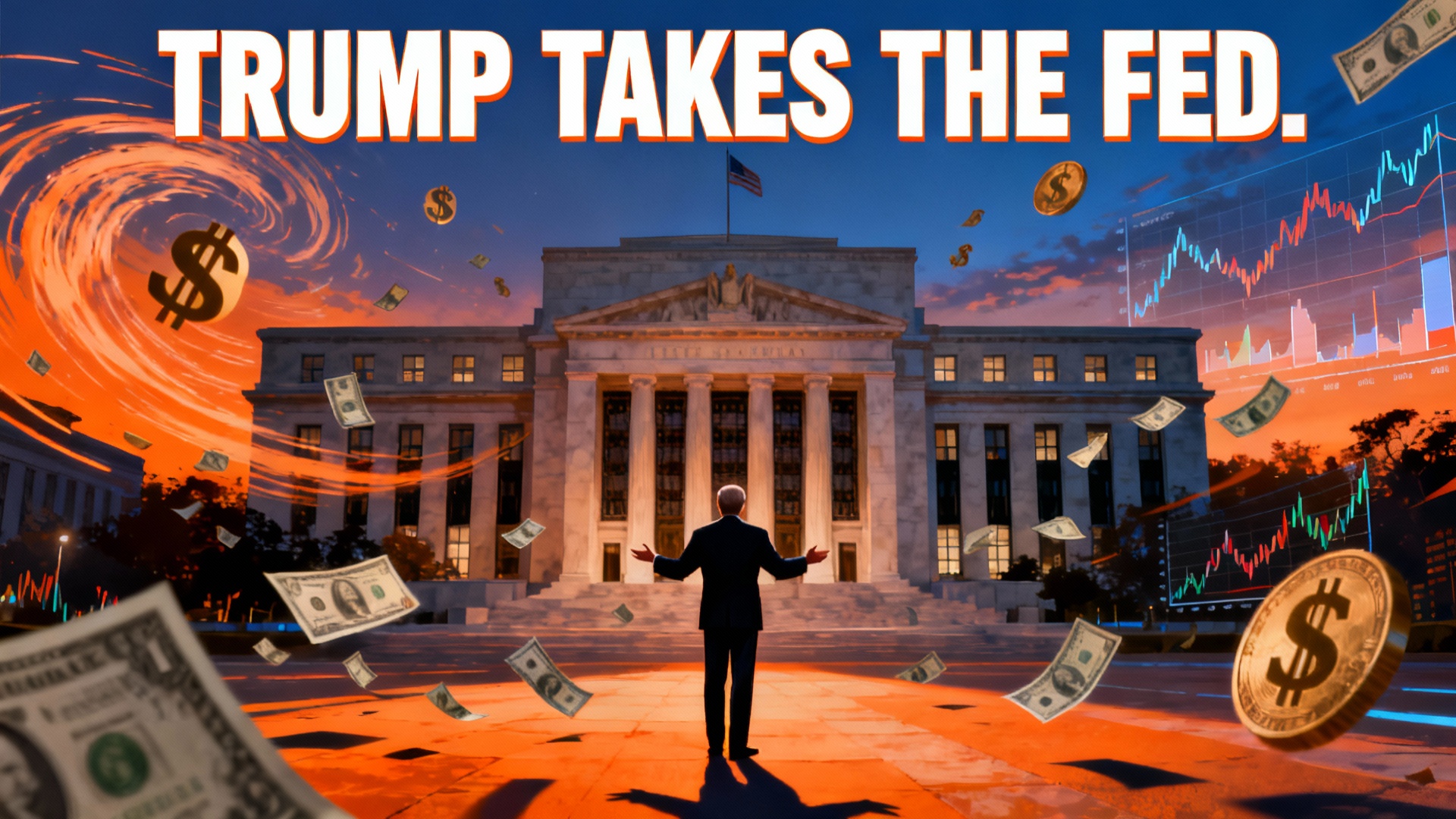
Imagine waking up one day to find that the institution controlling your mortgage rates, your credit cards, and even the value of your savings is no longer independent. It takes its orders directly from the White House. This isn’t a plot from a thriller novel — it's the real possibility looming as President Trump announces his pick for the next Federal Reserve chair to take power in May 2026. Let’s unpack why this matters to you more than you might think.
The Historic Shift: Trump’s 2026 Fed Chair Pick and Why It Matters
December 1st, 2024, might have seemed like just another day as most Americans were busy planning for the holidays. But while you were thinking about gifts and gatherings, President Trump quietly made an announcement that could change the financial landscape for years to come. He named his frontrunner for the next Federal Reserve chair: Kevin Hassett, a trusted economic adviser from his first term. This isn’t just another political appointment—it’s a move that could affect your mortgage, your savings, and even the value of every dollar in your wallet.
Why the Trump Fed Chair Pick Is a Big Deal
Let’s break down why this matters. The Federal Reserve, often called “the Fed,” is the most powerful financial institution in the United States. It sets interest rates, which directly impact:
- Your mortgage payments
- Car loans and student loans
- Credit card rates
- The value of the U.S. dollar
For over a century—112 years, to be exact—the Fed has operated independently from the White House. This separation was designed to keep politics out of decisions that affect the entire economy. The idea is simple: if politicians could control the Fed, they might be tempted to make short-term decisions that look good for elections but hurt the economy in the long run.
May 2026: The End of an Era for Federal Reserve Leadership
Here’s the key date you need to know: May 2026. That’s when Jerome Powell’s term as Fed chair expires. On that day, Trump’s chosen successor—likely Kevin Hassett—will take the reins. Financial markets, economists, and even everyday savers are watching this date closely. Why? Because it marks what many are calling the end of Federal Reserve independence.
“This is the scenario I feared most. We're watching the systematic politicization of the institution that underpins dollar credibility.”
— Muhammad Elaran, former CEO of PIMCO
For decades, both Republican and Democratic presidents have respected the tradition of keeping the Fed separate from politics. The chair and governors serve long terms—four years for the chair, fourteen for governors—to prevent short-term political pressure from influencing decisions. Trump’s early announcement and the choice of a loyalist like Hassett signal a break from this tradition, raising concerns about the future of the U.S. economy.
What Happens When the Fed Loses Its Independence?
Let’s get practical. The Fed’s independence has been the backbone of America’s stable currency and low inflation for generations. When the Fed can make decisions without political interference, it can focus on what’s best for the economy—not just what’s popular with voters. If that independence ends, history shows we could see:
- Short-term interest rate cuts to boost the economy before elections
- Higher inflation over time, which erodes your savings
- Uncertainty in global markets about the value of the U.S. dollar
“We are witnessing the reversal of roughly 90 years of central bank independence, the single most important institutional innovation in 20th century economics.”
— Niall Ferguson, economic historian
Think about it: if the Fed starts making decisions based on politics instead of economics, your mortgage rate, your retirement account, and the cost of everyday goods could all be at risk. That’s why the Trump Fed chair pick for 2026 is about more than just a name—it’s about the future of your money and the stability of the entire economy.
Fed Chair Successor: Why Kevin Hassett?
Kevin Hassett isn’t just any economist. He served as Trump’s chief economic adviser and is known for his loyalty to the former president’s agenda. His appointment would mark a sharp turn from the tradition of nonpartisan Federal Reserve leadership. With interest rates currently around 4.25%, the next Fed chair will have enormous influence over whether borrowing gets cheaper or more expensive—and whether inflation stays in check or spirals out of control.
In short, the Federal Reserve leadership in 2026 isn’t just a headline for Wall Street. It’s a historic shift that could touch every part of your financial life.
Why Political Control Over the Fed Is a Dangerous Game
To really understand why Federal Reserve independence matters, let’s rewind to 1913. When Congress created the Fed, they weren’t just building another government agency—they were putting up a firewall between your money and politicians. They had seen, time and again, what happens when leaders get their hands on the nation’s wallet. Politicians, eager for short-term wins, would print money or cut interest rates before elections to make the economy look strong. But after the votes were counted, inflation would surge, and everyday Americans paid the price. The founders of the Fed wanted to break this cycle.
That’s why the Fed’s structure is so unique. The Fed chair nomination is for four years, but the real power lies in the Board of Governors, where each member serves a staggered 14-year term. This design makes it nearly impossible for any single president to “pack” the board with loyalists. The idea was simple: keep monetary policy decisions in the hands of experts, not politicians chasing the next election. For over a century, this system worked. The U.S. dollar became the world’s most trusted currency, and our financial system was the envy of the globe.
But now, we’re seeing something different. Trump pressures Fed in a way that breaks with tradition. In August 2025, he didn’t just hint at what he wanted—he posted, in all caps, on Truth Social, demanding a massive rate cut: from 4.25% down to 1.25%. This isn’t just unusual; it’s unprecedented. Past presidents, including Obama and Bush, might have grumbled about Fed decisions, but they respected the Fed’s autonomy. Trump, on the other hand, is making his intentions clear: he wants the Fed to cut rates dramatically and immediately, and he’s determined to appoint people who will do exactly that.
Why is this so risky? History gives us a clear warning. The most famous example is Richard Nixon and Fed Chair Arthur Burns in 1972. Nixon wanted the economy to boom before his reelection, so he pressured Burns to slash rates. The result? The economy surged, Nixon won in a landslide, and then inflation exploded—peaking at 13% by 1974. The value of savings was wiped out, and it took nearly a decade to fix the mess. This is what happens when the Fed is used for political advantage: short-term gains, long-term pain.
As economist Muhammad Elaran put it,
"We're watching the systematic politicization of the institution that underpins dollar credibility."
When the Fed is pressured to juice the economy for political reasons, it undermines trust in the dollar and makes it harder for businesses and families to plan for the future. Inflation spikes hurt everyone, but especially savers, retirees, and people on fixed incomes. If the Fed caves to political pressure and slashes rates as Trump demands, we could see a repeat of the 1970s: a quick economic sugar high, followed by years of high prices and economic instability.
Here’s what makes the current situation even more concerning:
- Staggered 14-year terms for Fed governors are supposed to prevent any president from packing the board. But by the end of 2026, Trump could have a majority of loyalists in place.
- Public pressure—like calling for a 3-point rate cut on social media—breaks the norm of keeping monetary policy above politics.
- Political manipulation of the Fed can create a cycle of boom and bust, making it impossible for families and businesses to plan ahead.
- Trust in the Fed is crucial for keeping inflation expectations low and the dollar strong. Undermining that trust risks long-term economic damage.
The bottom line: The Fed was designed to shield your money from political games. When that wall starts to crumble, history shows it’s everyday Americans who pay the price. Trump Fed rate cuts might feel good in the short run, but the long-term risks are real—and they’re right in front of us.
Meet Kevin Hassett and the Fed Loyalists: What Are Their Plans?
When it comes to the next Trump Fed chair pick, the spotlight is on Kevin Hassett—a name you’ll want to remember. Hassett isn’t just any economist. He’s famous (or infamous) for his bold predictions and unwavering loyalty to Trump. Back in 1999, Hassett made headlines by predicting the Dow would hit 36,000. That was right before the dot-com bubble burst, sending markets into a tailspin. Fast forward to 2020, and he was again in the news for saying the coronavirus would be gone by summer. Both calls turned out to be overly optimistic, but what really sets Hassett apart is his reputation for telling Trump exactly what he wants to hear, every single time.
That’s not independence. That’s loyalty. And when it comes to the Fed chair appointment, loyalty is the key word. Trump’s strategy is clear: surround himself with loyalists who will back his agenda, even if it means putting economic stability at risk.
Who Are the Fed Loyalists?
- Kevin Hassett: Known for optimistic but flawed predictions, Hassett has a track record of aligning his views with Trump’s political goals. He’s not just a policy wonk—he’s a political ally.
- Michelle Bowman: Appointed by Trump in 2018, Bowman has already shown what a Trump-aligned Federal Reserve looks like. In 2024, she was the only governor to vote against keeping certain bank regulations in place—rules that were put in after the 2008 financial crisis to stop banks from taking excessive risks with your money.
Bowman’s vote is a preview of what happens when loyalty to Trump outweighs the Fed’s traditional focus on financial stability. Every other governor, including current Chair Jerome Powell, voted to keep those safeguards. Bowman stood alone, pushing for deregulation. If you’re wondering what a Trump Fed leadership team might do, look no further than her record.
Trump’s Plan: Control the Fed Board
The Federal Reserve Board has seven governor seats. As of December 2025, there are two vacancies. Trump will get to fill both of those seats. Add in Hassett replacing Powell in May 2026, and you’ve got three new Trump appointees right away. But it doesn’t stop there. According to Bloomberg analysis, Trump could control five out of the seven voting seats by early 2027. That’s a clear majority—enough to steer monetary policy, interest rates, and regulations in whatever direction he chooses.
| Fed Board Seats | Vacancies (Dec 2025) | Trump Appointees by 2027 |
|---|---|---|
| 7 | 2 | 5 |
This level of control is unprecedented. With a majority on the board, Trump’s team could make sweeping changes to how the Fed operates. That means more than just picking the next Fed chair successor—it’s about reshaping the entire institution.
What Are Their Plans?
- Roll Back Regulations: Trump’s loyalists, like Bowman, have already shown a willingness to dismantle banking safeguards put in place after the 2008 crisis. These rules were designed to prevent banks from taking excessive risks with your deposits. Removing them could open the door to another financial meltdown.
- Political Over Economic Stability: The main concern is that Trump’s appointees will prioritize political goals over the Fed’s traditional focus on economic stability. As economist Muhammad Elaran put it:
'This is the scenario I feared most.'
- Influence Interest Rates: With control of the board, Trump’s picks could push for lower interest rates to juice the economy ahead of elections, even if it risks higher inflation or financial bubbles.
Governor terms are staggered, which usually makes it hard to change the Fed’s makeup quickly. But Trump’s aggressive plan to fill vacancies means he could have a majority sooner than anyone expected. That’s why the Trump Fed chair pick and his broader Fed appointments matter so much for your money and the stability of the financial system.
Your Wallet at Risk: How Fed Decisions Affect Everyday Americans
When you hear about the Federal Reserve in the news, it might sound distant and technical. But the truth is, every decision the Fed makes can hit your wallet directly—sometimes in ways you notice right away, and sometimes in ways that sneak up on you over time. Let’s break down exactly how Federal Reserve independence, interest rates policy, and political influence can impact your everyday finances.
Mortgage Rates: The Fed’s Direct Line to Your Monthly Payment
If you have a mortgage, or you’re thinking about buying a home, the Fed’s interest rate policy is front and center in your financial life. The Fed sets the benchmark for borrowing costs across the country. When the Fed raises rates, mortgage rates go up. That means higher monthly payments for new buyers and anyone with an adjustable-rate mortgage. For example, a 1% increase in interest rates can add hundreds of dollars to your monthly payment on a typical 30-year loan. On the flip side, Fed rate cuts can lower payments, but if they’re timed for political reasons, you could see rates swing up again just as quickly—making it hard to plan for the future.
401(k)s, Retirement Funds, and the Stock Market Rollercoaster
Your retirement savings—whether in a 401(k), IRA, or other investment account—are also tied to the Fed’s moves. When the Fed cuts rates, stock markets often surge, boosting your account balance. But these gains can be temporary if the cuts are meant to juice the economy before an election, rather than reflect real economic strength. If inflation follows, the value of your savings can erode quickly. History shows that after periods of political Fed control, inflation can spike—sometimes reaching double digits, as it did at 13% after past interventions. That means your money buys less, and your hard-earned savings lose value.
Car Loans, Credit Cards, and Everyday Borrowing Costs
It’s not just your home—car loans and credit cards are also affected by the Fed’s interest rates policy. When rates go up, so do your monthly payments on new loans and outstanding credit card balances. For families already stretched thin, even a small rate hike can mean less money for groceries, gas, or savings. Conversely, artificially low rates may make borrowing seem attractive, but they can create bubbles—like soaring car prices or unsustainable household debt—that eventually burst.
Inflation: The Silent Threat to Your Purchasing Power
One of the Fed’s main jobs is to keep inflation in check. When the Fed is pressured by political leaders to cut rates for short-term gains, it can unleash a wave of inflation that’s hard to stop. Inflation eats away at your purchasing power, making everything from rent to groceries more expensive. If you’re on a fixed income or saving for retirement, this can be devastating. As Nile Ferguson warns,
“We are witnessing the reversal of roughly 90 years of central bank independence.”Without that independence, your financial security is at risk.
Political Influence: Booms, Busts, and Your Financial Security
When the Federal Reserve’s independence is compromised, the risks for everyday Americans multiply. Political leaders may push for Fed rate cuts to create an economic boom before an election—making stocks and home prices soar. But these artificial booms are often followed by painful busts, with job losses, falling home values, and shrinking retirement accounts. The delayed effects of rate cuts can also lead to inflation spikes, catching families off guard and making it harder to plan for the future.
- Stable interest rates are critical for financial planning.
- Artificially low rates encourage borrowing but can create bubbles.
- Investors and homeowners must understand Fed’s political influence risks.
- Fed decisions influence affordability of big-ticket purchases.
- Financial security depends on Fed autonomy.
The bottom line: The Federal Reserve’s independence isn’t just an abstract concept—it’s the foundation of your ability to buy a home, save for retirement, and afford everyday life. When that independence is threatened, your wallet is on the line.
Echoes of History: Lessons from Nixon’s Fed Manipulation
When you hear about Trump pressuring the Fed or setting an early date for a Fed chair replacement, it’s impossible not to think back to one of the most infamous chapters in American economic history: President Richard Nixon’s manipulation of the Federal Reserve in the early 1970s. This story isn’t just a history lesson—it’s a warning about what can happen when politics and monetary policy mix.
Nixon’s Playbook: Pressure, Rate Cuts, and a Political Win
In 1972, President Nixon was facing a tough re-election campaign. He wanted the economy to look strong, so he leaned hard on Fed Chair Arthur Burns to cut interest rates. The goal? Spark an economic boom just in time for voters to hit the polls. Burns complied, slashing rates and pumping money into the economy. The result was immediate: growth surged, jobs were plentiful, and Nixon cruised to a landslide victory.
- Nixon pressured the Fed to cut rates before the 1972 election.
- The economy boomed, and Nixon won big.
- But the good times didn’t last.
Inflation Erupts: The Hidden Cost of Political Interference
After the election, the consequences of those easy-money policies hit hard. By 1974, inflation soared to a staggering 13%. Prices for everything—from groceries to gas—skyrocketed. The value of savings was destroyed, and the purchasing power of everyday Americans took a massive hit. Millions watched their financial security evaporate almost overnight.
- 1974 inflation rate: 13%
- Consumer savings and purchasing power devastated
- Economic pain spread across the country
The lesson here is clear: when the Fed’s independence is compromised for short-term political gain, the long-term costs can be devastating. Political meddling with the Fed has a history of leading to inflation crises that hurt ordinary Americans most.
The Painful Cure: Volcker, Sky-High Rates, and Recession
Fixing the mess created by Nixon’s interference wasn’t easy—or quick. By the late 1970s, inflation was still raging. Enter Paul Volcker, the new Fed Chair, who made the tough call to raise interest rates above 20% in the early 1980s. This move was brutal for borrowers and businesses, but it was the only way to break the back of inflation.
Paul Volcker: “Raising rates was brutal but necessary to restore economic stability.”
- Early 1980s interest rates: Above 20%
- Resulted in a severe recession
- But ultimately restored economic stability
The inflation crisis lasted nearly a decade. It took years of high unemployment and economic pain before stability returned. The cost of those earlier political decisions was paid by millions of Americans who lost jobs, homes, and savings.
Why This Matters Now: Lessons for Today’s Fed Chair Nomination
The Nixon-Fed saga is a cautionary tale for anyone watching today’s headlines about Fed chair nominations and Fed chair appointments. When presidents try to use the Fed to engineer short-term economic gains—especially around elections—the risks to your money are real. History shows that delayed consequences from politically motivated rate cuts can cripple consumer finances for years.
As Trump openly discusses his plans to appoint loyalists and push for immediate, dramatic rate cuts, the parallels are hard to ignore. Just like in the 1970s, the temptation for a quick economic boost before an election is strong. But as history warns, those short-term wins can lead to long-term economic pain, with inflation and instability that take years—and painful measures—to fix.
The lesson for today’s Fed leadership and political appointees is simple: protecting the Fed’s independence isn’t just about politics—it’s about safeguarding your financial future. The echoes of Nixon’s Fed manipulation remind us that when the central bank becomes a tool for political gain, it’s everyday Americans who pay the price.
Wall Street’s Take: How Big Investors Are Preparing
If you think the question of who leads the Federal Reserve is just political drama, think again. Wall Street’s biggest players—investment banks, hedge funds, and institutional investors—are already bracing for the impact of Trump’s early 2026 Fed chair selection. The stakes are high, and the moves being made right now could shape your portfolio’s future in ways you might not expect.
Investment Banks Sound the Alarm on Trump Fed Leadership
Major investment banks aren’t waiting for the official announcement. They’ve been issuing increasingly urgent warnings about the direction of the Federal Reserve under a Trump Fed chair pick. In November 2025, Evercore ISI, one of the most respected research firms on Wall Street, published a report with a title that should catch every investor’s attention: “The Significant Trumpification of the Federal Reserve Through 2026.”
This isn’t just political commentary. It’s a clear signal from a major financial institution to its clients—some of the largest investors in the world—that the era of Federal Reserve independence may be ending. Evercore ISI’s report outlines how Trump’s plan to control 5 of the 7 voting seats on the Fed’s Board of Governors could fundamentally change U.S. monetary policy.
What Does ‘Trumpification’ of the Fed Mean?
The term ‘trumpification’ is now being used by Wall Street analysts to describe the increasing politicization of the Federal Reserve. This means that decisions about interest rates, inflation, and economic growth could be driven more by political goals than by economic data. For investors, this is a seismic shift.
According to Evercore ISI, the risk isn’t just theoretical. Their November 2025 report warns that the Trump Fed chair pick could lead to:
- More aggressive rate cuts to stimulate short-term growth
- Potential for higher inflation if monetary policy becomes too loose
- Uncertainty in bond and currency markets as investors question the Fed’s independence
Major Institutions Warn Clients About Fed Independence
It’s not just Evercore ISI raising the red flag. Other major financial institutions are alerting their clients to the risks of a politicized Federal Reserve. The message is clear: the traditional “rules of the game” may no longer apply if political influence dominates the Fed’s decision-making process.
Muhammad Elaran, chief economic adviser at Alons and former CEO of PIMCO, summed up the mood on Wall Street: “This is the scenario I feared most.”
Elaran’s warning highlights the systemic risks that come with political interference in monetary policy. If you’re an investor, it’s crucial to understand that Wall Street’s concerns aren’t just about headlines—they’re about real changes that could impact your money.
Bond Investors Brace for Politicized Monetary Policy
Top bond investors are especially nervous. The bond market relies on the Fed’s credibility and its commitment to keeping inflation in check. If investors believe that the Trump Fed leadership will prioritize political goals over economic stability, they may demand higher yields to compensate for the added risk. This could push up borrowing costs across the economy, affecting everything from mortgages to corporate loans.
How Wall Street Is Positioning for a Political Fed
So, how are big investors preparing for these changes? Here’s what’s happening behind the scenes:
- Hedging against inflation: Many funds are increasing their exposure to assets that tend to do well when inflation rises, such as commodities and inflation-protected bonds.
- Rebalancing portfolios: Some are reducing holdings in long-term government bonds, which are most sensitive to changes in Fed policy.
- Seeking global diversification: With uncertainty around the U.S. dollar, investors are looking at foreign assets and currencies as a hedge.
Wall Street’s moves suggest a growing belief that political control over the Fed is becoming the new normal. If you’re investing for the long term, it’s more important than ever to pay attention to these shifts. The Trump Fed chair pick isn’t just a headline—it’s a signal that the rules of investing may be changing right before your eyes.
What You Can Do: Preparing Your Finances for a Politicized Fed Era
The coming shift in Federal Reserve independence is more than a headline—it’s a direct challenge to your financial security. With Trump’s early 2026 Fed chair pick and the clear intention to reshape interest rates policy for political gain, the impact on your money could be profound. But you’re not powerless. By understanding what’s at stake and acting now, you can cushion yourself against the risks of a politicized Fed and unpredictable Trump economic policies.
First, stay alert. The next five months are critical. Follow Fed appointments and policy statements closely. When you see names like Kevin Hasset or Michelle Bowman, recognize what they represent: a shift away from data-driven decisions toward political loyalty. Knowing who’s making the decisions—and why—gives you a head start in anticipating market moves. Don’t rely on headlines alone; dig a little deeper, read financial analyses, and consider how these changes could affect your mortgage, your savings, and your investments.
Second, diversify your investments. In an era where interest rates policy could swing wildly for political reasons, putting all your eggs in one basket is risky. If you’re heavily invested in long-term government bonds, remember: when rates are cut for political gain, those bonds may rise in value briefly, but inflation can quickly erode their worth. Use that window to rebalance. Look at assets that historically weather inflation well—TIPS (Treasury Inflation-Protected Securities), gold, and commodities. Consider international diversification, too. Countries with strong central bank independence, like Switzerland or Singapore, may offer more stable returns if the dollar’s credibility comes under pressure.
Next, review your debt. If you have a mortgage or plan to buy a home, now is the time to lock in a fixed rate. When the Fed slashes rates, variable-rate loans might look attractive, but remember: what goes down can come back up, especially if inflation forces the Fed’s hand later. Fixed-rate loans offer predictability, shielding you from sudden payment spikes if rates have to rise to fight inflation down the road.
Inflation-resistant savings strategies are also essential. High inflation eats away at cash sitting in low-yield accounts. Explore savings vehicles that adjust for inflation, or consider short-term CDs that let you move your money as rates change. If you’re nearing retirement, talk to your advisor about shifting some assets into sectors and companies with strong pricing power—those that can pass higher costs onto customers.
Don’t underestimate the power of advocacy. The end of Federal Reserve independence isn’t inevitable. Stay informed, vote, and let your representatives know you value an independent central bank. Public pressure helped shape the Fed’s structure in 1913, and civic engagement can still influence future policy decisions. The more Americans understand what’s at stake, the harder it becomes for any administration to quietly erode the safeguards that protect our economy.
Finally, plan for cycles. Political influence on the Fed means economic booms may be followed by sharp busts. Don’t get caught up in the euphoria if your 401k surges after a big rate cut. Remember the lessons of the 1970s: short-term gains can quickly turn into long-term pain if inflation spirals. Balance your portfolio for both growth and resilience, and keep some liquidity on hand for unexpected shocks.
In the end, preparation is your best defense. The Fed chair pick impact will ripple through every corner of your financial life, but by staying informed, diversifying, reviewing your debt, and advocating for sound policy, you can protect your future. The next era may be uncertain, but your response doesn’t have to be. Take action now—because in a politicized Fed era, individual choices matter more than ever.
TL;DR: President Trump’s upcoming appointment of the Federal Reserve chair in 2026 threatens to end over a century of Fed independence, potentially allowing political interference in interest rate decisions that affect your wallet, investments, and economic future. This shift echoes past mistakes with historic inflation crises and could destabilize the economy, making it essential for you to stay informed and prepared.



0 Comments