
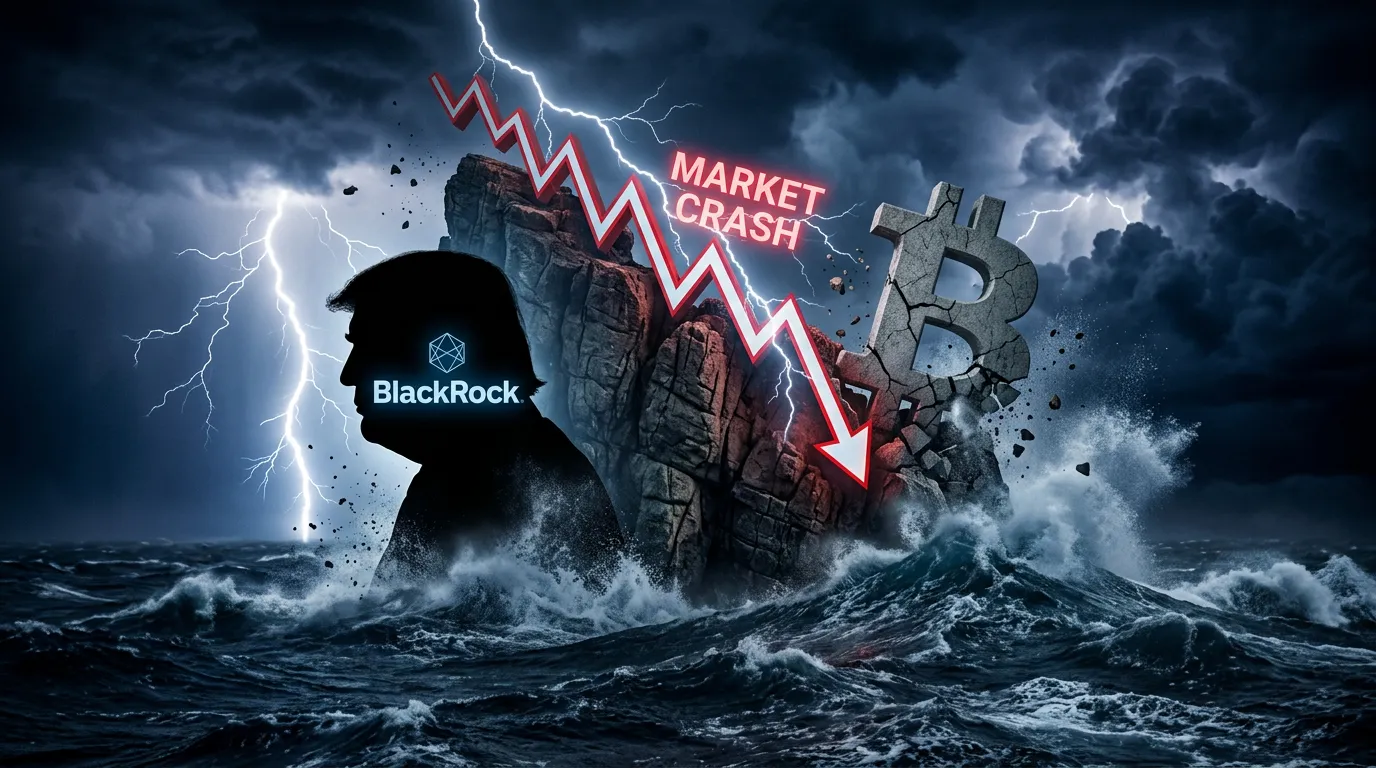
Explosive news from Trump has roiled markets and grabbed headlines: Trump Triggers Blackrock PANIC! (Bitcoin in DANGER?), a stark signal that even the biggest asset juggernauts can sprint toward liquidity stress when geopolitics heat up. The immediate tremor hits BlackRock, with whispers of withdrawal limits and risk controls that ripple through private credit and ETF holdings. Bitcoin, long tethered to Wall Street moves, is not escaping the pressure: volatility spikes as institutions reassess exposure, even as some traders hedge against fiat shocks. The question now is not certainty but reaction—will portfolios tilt toward safety, or seize opportunities amid stressed assets? As headlines cascade, investors watch sentiment and policy shifts for clues about tomorrow's price path.
Did You Know?
💡 Did you know? BlackRock controls roughly $10 trillion in assets, and in Q1 its flagship private credit fund reportedly faced 7.9% redemptions totaling about $1.7 billion, signaling liquidity stress.
Source: Reuters
Blackrock's Response: A Disturbing Trend
The Trump moment reverberated through corridors of power and portfolios alike, but its most tangible impact unfolded at BlackRock. As the firm’s executives publicly signaled a tough stance on geopolitical risk, a different kind of pressure showed up where it hurts most: liquidity. BlackRock, often seen as a barometer for institutional markets, appears to be tightening access to capital in one of its most leveraged corners, signaling that even the largest asset manager can face constraint under stress. With roughly $10 trillion under management, the actions ripple beyond a single fund and into broader market psychology.
The immediate consequence was a sharp turn in investor behavior. After a wave of redemptions, BlackRock restricted withdrawals from its flagship private credit fund, a move that insiders flagged as a liquidity risk indicator rather than a routine operational pause. The firm reported 7.9% redemptions totaling about $1.7 billion in Q1, underscoring how quickly investor sentiment can flip when liquidity is scarce. In parallel, BlackRock’s publicly traded equity has slumped, reflecting a market reassessment of the firm’s ability to weather a prolonged period of outflows. The dynamic showcases a fragile balance between liquidity provisioning and redemptions for a financial giant that previously seemed immune to such constraints.
Liquidity Stress Signals at BlackRock
BlackRock restricted withdrawals from its flagship private credit fund after a wave of redemptions, signaling distress in the firm’s liquidity profile. The move followed 7.9% redemptions totaling $1.7 billion in Q1, underscoring the clock on investor exits. The stock has fallen about 21% from its late-October peak, adding to concerns about systemic liquidity crunch in a behemoth managing roughly $10 trillion.
- ✓ Withdrawal restrictions on the flagship private credit fund
- ✓ 7.9% redemptions totaling $1.7B in Q1
- ✓ BlackRock share price down ~21% from Oct peak
- ✓ Increased scrutiny of liquidity risk in private markets
- ✓ Historical context: episodes of stressed exits can precede sharper liquidity pullbacks
Beyond the raw numbers, the episode raises questions about how quickly macro shocks can seep into private markets. BlackRock’s maneuvering signals a cautious stance toward liquidity risk, a move that could recalibrate expectations for other asset managers with similar private market exposures. Investors watching bitcoin and crypto-linked products should note how traditional institutions’ liquidity discipline can influence risk premia and entitlements across alternative assets. The environment remains unsettled, but it is not entirely without precedent or opportunity for those who can read liquidity signals accurately.
In the broader frame, Bitcoin’s resilience remains a counterpoint to the cash constraints plaguing equity and credit markets. While BTC has faced its own downcycle, the tension between traditional liquidity constraints and digital-asset demand will likely shape price discovery in the weeks ahead. The disruption at a behemoth like BlackRock underscores that even giant market players can be vulnerable to abrupt shifts in redemption dynamics—reminding readers that the real frontier is the interplay between macro policy, fund liquidity, and investor psychology rather than any single asset class.
Market Sentiment and Institutional Investment
Trump's Iran Stance Amplifies Geopolitical Risk
Unconditional surrender rhetoric shifts risk premia and prompts risk-off behavior across institutions.
BlackRock Liquidity Stress Signals
Redemptions hit 7.9% (~$1.7B) in Q1; the flagship private credit fund blocks withdrawals signaling liquidity stress.
Bitcoin in the Eye of the Storm
BTC faces ETF competition and macro volatility; down ~41% from October but showing resilience amid turmoil.
Equity-Crypto Correlation Tightens
Institutional risk-off flows spill into crypto as correlations with equities reprice risk and liquidity tightens.
Buying Opportunities in Disguise
Despite fear, downturns can reveal selective opportunities if risk is understood and capital is patient.
Geopolitics and liquidity are colliding in real time. Trump's Iran stance elevates geopolitical risk premia, sending risk-off signals across macro funds and crypto desks alike. The immediate ripple was felt at BlackRock, where withdrawals were restricted after a 7.9% redemption spike totaling about $1.7 billion in Q1, underscoring material liquidity strains in the firm's flagship private credit fund.
Against this backdrop, BlackRock's share price slid roughly 21% from its October peak, fueling fears of a broader reassessment among institutions. Bitcoin, while showing pockets of resilience, has extended its drawdown to around 41% since October as ETF dynamics and macro volatility reprice risk across markets.
Geopolitical uncertainty around Iran leadership, including news about exiled crown prince Raza Pavlavi taking a transitional role, adds a layer of ambiguity that complicates risk models. In such an environment, traders ask whether to hunker down, or to scrutinize production cost signals to identify potential catalysts for relief rallies.
Market psychology now sits at 'max pain,' with fear indices elevated and correlations between equities and crypto heightened. Yet downturns also illuminate selective buying opportunities for long-term holders who can distinguish quality projects from noise and calibrate cost of production thresholds for entry.
Looking ahead, institutional investment may tilt toward liquidity management, hedging, and clear governance around crypto exposures. The path for crypto will hinge on macro stabilization, ETF flows, and the ability of major players to rebuild trust in liquidity and risk controls.
Surviving the Storm: Tips for Investors
OPPORTUNITIES
Strategic Buying Amid Volatility
Panic-driven moves create buying edges. Consider phased entries (dollar-cost averaging) into Bitcoin and quality equities. Maintain liquidity to deploy on further dips; long-term investors should emphasize thesis durability over day-to-day swings.
Trump's hardline stance on Iran rattled Black Rockck and sent tremors through major portfolios. Redemption redemptions surged; panic can beget opportunities for the disciplined. This requires patience, planning, and adherence to a structured buy-list rather than reactive moves.
Bitcoin sold off roughly 41% since October, even with ETF involvement. Use phased entries via dollar-cost averaging to build exposure gradually, and set guardrails for drawdown. Avoid chasing the bottom on headlines; instead look for confirmed support zones and on-ramps with credible liquidity. Maintain liquidity to deploy on further dips; let fundamentals guide which vehicles you accumulate.
Long-term investors should hold a thesis that survives macro storms and diversify across time horizons, deploying capital in measured, scalable steps. Short-term investors should adhere to defined risk limits, preset take-profit and stop-loss levels, and avoid emotion-driven allocation. Regular reviews help separate signal from noise.
Keep liquidity for future dips, rebalance periodically, and avoid overconcentration in any single catalyst. Diversify assets with low correlations to reduce drawdown risk. The storm will pass, but prepared portfolios weather the gusts.
Frequently Asked Questions
Frequently Asked Questions
| Question | Answer |
|---|---|
| What led to BlackRock's panic? |
Trump's hard-line Iran stance coincided with a liquidity scare at BlackRock. Reuters noted withdrawals from its flagship private credit fund reached 7.9% in Q1, about $1.7 billion, triggering a liquidity squeeze and a sharp drop in BlackRock's stock (roughly 21% from its October peak). This panic underscores how swiftly liquidity concerns can ripple through asset managers when geopolitical risk spikes. |
| How is Bitcoin affected by geopolitical unrest? |
Geopolitical turmoil often drives risk-off moves. Bitcoin has shown resilience but traded under pressure, down about 41% from October. ETF competition and broad market anxiety can amplify volatility, though some traders view it as a hedge against fiat stress depending on the news cycle. In times of uncertainty, Bitcoin's role as a store of value vs. risk asset remains debated, with adoption catalysts and regulatory signals shaping the path forward. |
| Should I invest in Bitcoin now? |
Not financial advice, but downturns can present buying opportunities for patient investors. Consider your risk tolerance and Bitcoin's volatility, plus regulatory headlines. The context notes a production-price-like benchmark around $19,000; diversify and assess potential drawdowns before committing. If you’re leaning in, use disciplined strategies like dollar-cost averaging and clear risk controls to manage downside exposure. |



0 Comments