
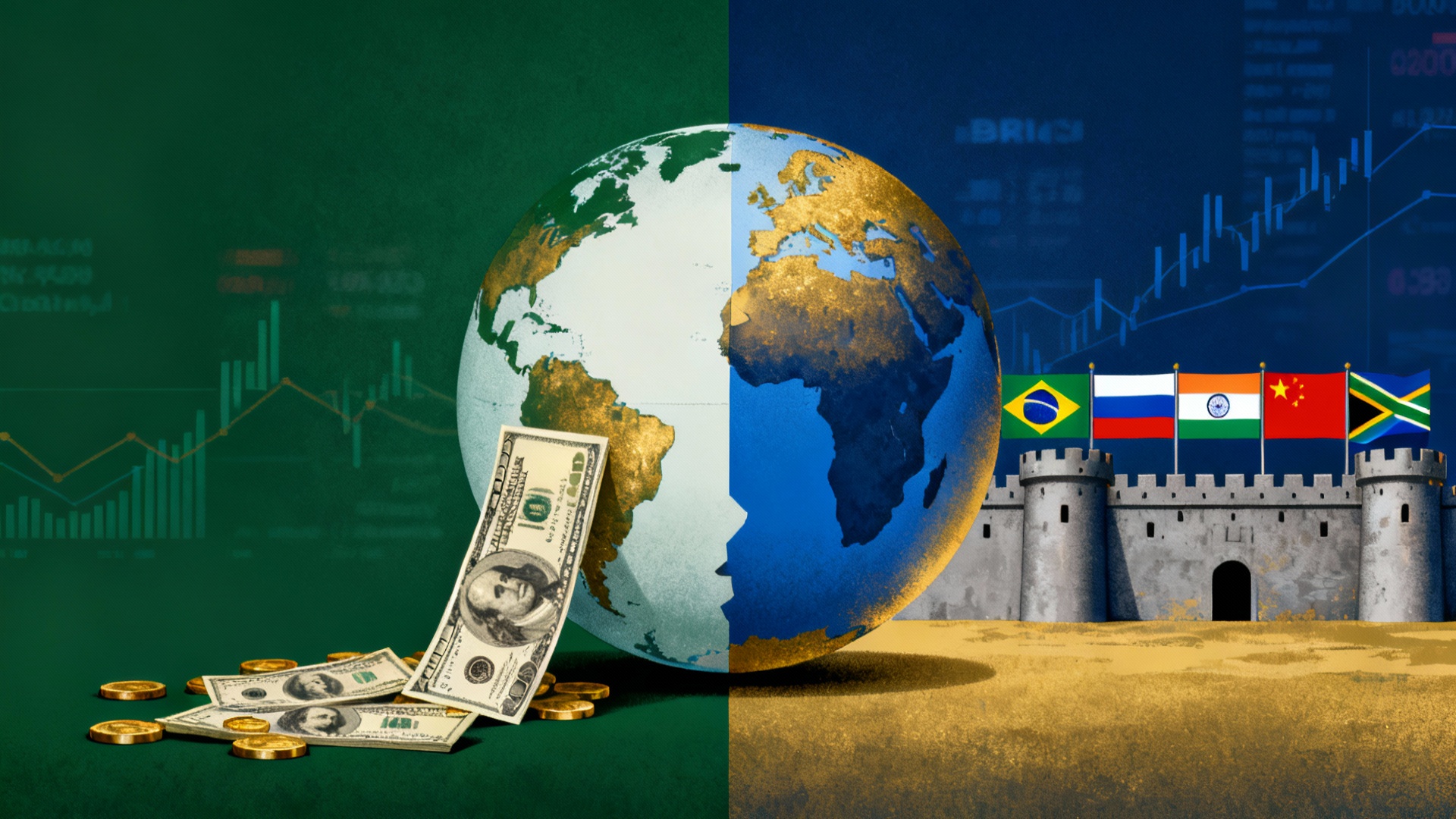
Imagine waking up one day to find your largest business partner suddenly demanding cash instead of IOUs. That's essentially what the US is facing as China and BRICS nations embark on a historic sell-off of US Treasury securities. This isn't just market volatility—it's a seismic shift with far-reaching consequences for your savings, mortgages, and the global economic order.
China Cuts US Treasury Stockpile: From Largest Holder to Third Place
If you’ve been following the headlines about China Treasury holdings, you know something big is happening. For years, China was the world’s largest foreign holder of US Treasury securities, peaking at around $1.3 trillion back in 2013. Fast forward to April 2025, and that number has plunged to just $757 billion—a staggering 44% drop in only twelve years. This isn’t just a minor adjustment or routine portfolio rebalancing. It’s a deliberate, strategic move that’s shaking up the global financial landscape.
From Top Holder to Third Place: The Numbers Tell the Story
Let’s break down what’s really going on. China’s US Treasury holdings have fallen so much that the country has slipped from the top spot to third place among foreign holders of US Treasuries, now trailing behind both Japan and the UK. This shift isn’t just about numbers—it’s about a fundamental change in how China views its relationship with the US dollar and the American financial system.
- 2013: China’s US Treasury holdings peak at $1.3 trillion
- April 2025: Holdings fall to $757 billion
- 12-year decline: 44% reduction
- Current rank: Third largest foreign holder, behind Japan and the UK
Not a Routine Sell-Off—A Strategic Shift
What makes this even more striking is the pace and timing of the recent China US Treasuries sell-off. In July 2025 alone, China dumped $25.7 billion in US Treasuries in a single month. Just a few months earlier, in April, they sold off another $8.2 billion right after the US announced new tariffs. If you add up the numbers, China has liquidated over $54 billion in just a few months. If this pace keeps up, we’re looking at an annualized dumping rate of $300 billion.
This isn’t a case of China tweaking its investment mix. As one market expert put it:
China is dumping Treasuries because they’ve calculated that the political risk of holding them now outweighs the financial benefit.
In other words, China is using its remaining Treasury position as a retaliatory financial weapon, not as a long-term investment for portfolio return.
Why Is China Selling? The Trade War Connection
The timing of these moves is no coincidence. China’s most aggressive sell-offs have lined up almost perfectly with major US trade policy changes, especially the new tariffs announced in 2025. This is widely seen as a direct response—a way for China to push back against what it sees as economic aggression from Washington. The message is clear: if the US is going to use trade as a weapon, China is willing to use its financial leverage in return.
Market analysts agree this is a strategic, not accidental, decision. The US Treasury sell-off is a signal that China is no longer comfortable relying on the dollar as the backbone of its reserves, especially when political tensions are running high.
Impact on the US and the World
So, what does this mean for you and for the global economy? When a major player like China starts returning IOUs at this scale, it puts pressure on US government bond demand and could push up interest rates. It also sends a warning signal to other foreign holders of US Treasuries: the old rules may no longer apply.
China’s calculated withdrawal from US Treasury securities marks a historic change in the US-China financial relationship. It’s not just about finance—it’s about trust, power, and the shifting balance in the global economy. As China moves away from the dollar, it’s also building new systems to bypass it entirely, signaling that this trend is likely to continue.
The BRICS Coordination: A United Front in Dollar Diversification
When you hear about countries selling US Treasury securities, it’s easy to think these are just isolated moves by individual nations. But what happened in October 2025 should make you look twice. In that single month, the BRICS countries—China, India, Brazil, Russia, and South Africa—collectively dumped $29 billion in US Treasuries. This wasn’t a random event. It was a coordinated move, and it signals a major shift in the global financial system.
Let’s put this in perspective. The BRICS nations together represent nearly half the world’s population. When they act together, it’s not just a blip on the radar—it’s a seismic shift. For years, foreign holders of US Treasuries have made headlines, but now, we’re seeing something different: a united front that’s actively working to reduce exposure to the US dollar and its influence.
From Isolated Sales to Coordinated Strategy
China’s journey tells the story. Back in 2013, China held about $1.3 trillion in US Treasury securities. By April 2025, that number had plunged to $757 billion—a staggering 44% decline over 12 years. This isn’t just about China. The other BRICS nations have followed suit, and the $29 billion sell-off in October 2025 marks a new era. It’s no longer about individual countries quietly adjusting their portfolios. Now, you’re watching a systematic, strategic unwinding of dollar exposure—one that’s carefully coordinated among some of the world’s largest economies.
Building Parallel Financial Systems
But the BRICS nations aren’t just selling Treasuries. At the same time, they’re building something new: a set of parallel financial systems designed to bypass the US dollar entirely. Here’s what they’re putting in place:
- Bilateral Trade Agreements in Local Currencies: BRICS countries are increasingly trading goods and services directly in their own currencies. This cuts out the dollar as the middleman, reducing demand for dollars and limiting US influence over their economies.
- BRICS Cross-Border Payment Platform: This new messaging platform is designed to replace SWIFT, the backbone of international dollar transactions. The system is deliberately architected to be surveillance resistant and sanction proof, making it harder for outside powers to monitor or block transactions.
- BRICS Grain Exchange: The group has launched a commodity trading platform where oil, wheat, minerals, and other resources can be bought and sold in local currencies. This means countries can secure vital supplies without ever touching US dollars.
These systems aren’t just ideas—they’re operational and expanding. Each step further reduces the need for the dollar in global trade and finance, challenging the long-standing dominance of US dollar-centric systems.
Why the Urgency Now?
You might wonder, why are BRICS nations moving so quickly to build these alternatives? The answer lies in what many experts now call US dollar weaponization. In recent years, the US has used its control over the global financial system to impose sanctions and freeze assets, sometimes overnight. For example, when Russia was cut off from SWIFT and its dollar assets were frozen, it sent a clear message to other countries: your reserves and access to the global financial system can be used as leverage in geopolitical disputes.
According to central bank data, 70% of global reserve managers now cite the US political climate and sanctions policy as their main reason for reducing dollar exposure. As one official BRICS statement puts it:
BRICS countries are firmly against using currencies, the US dollar in particular, as a foreign policy weapon.
This isn’t just about economics anymore—it’s about survival and sovereignty. By coordinating their efforts, BRICS nations are making it clear that they won’t let their financial futures be dictated by another country’s political decisions.
Challenging the Global Financial Order
The BRICS’ systemic approach to dollar alternatives is already disrupting the global financial order. By selling off US Treasury securities and building new infrastructure for trade and payments, they’re limiting dollar demand and reducing global dollar liquidity. This shift is more than symbolic—it’s a real challenge to the US dollar’s dominance and a sign that the balance of economic power is changing.
Unpacking the Weaponized Dollar Doctrine and Its Fallout
You might be wondering, why is there so much urgency now to move away from the US dollar, after decades of stability and dominance in global finance? The answer lies in what experts are calling the weaponized dollar doctrine. This is the hidden force behind the recent rush by countries like China to reduce their holdings of US Treasury securities and diversify their reserves.
Let’s break down what’s changed. According to recent data from central banks around the world, a staggering 70% of global reserve managers now cite the US political climate and sanctions policy as the main reason for cutting back on dollar exposure. That’s not a minor shift—it’s a dramatic acceleration from just a few years ago. Back then, reserve diversification was mostly about balancing portfolios or gradually adjusting to economic trends. Today, it’s about something much bigger: survival and sovereignty.
Reserve managers aren’t mincing words anymore. In fact, one official statement from the BRICS nations put it bluntly:
BRICS countries are firmly against using currencies, the US dollar in particular, as a foreign policy weapon.
So, what exactly triggered this change? Central bankers and finance ministers around the world have watched recent US actions closely. When the US imposed sweeping sanctions on Russia, it didn’t just freeze Russian dollar assets—it also cut Russia off from the SWIFT global payments system overnight. These moves showed just how quickly the US could use its financial infrastructure as a geopolitical weapon. The message received by every other country was crystal clear:
Holding dollars means accepting a level of political risk that didn't exist in previous decades.
Whether or not you agree with the sanctions, the impact is the same. Foreign holders of US Treasuries now have to consider that their monetary assets could become hostages in future political disputes. This is a huge shift from the historical norm. Since the Bretton Woods system was established in 1944, US Treasury securities were seen as the world’s safest, most apolitical investments. Foreign central banks bought them to keep their reserves stable, and in turn, this steady demand helped keep US interest rates low.
Here’s why that matters for you: when foreign governments trusted the US dollar and Treasuries, it meant lower mortgage rates for American homebuyers, cheaper loans for businesses, and smaller interest payments on our national debt. The whole system worked because everyone believed the US dollar was above politics—a neutral, safe asset.
But now, that trust is eroding. The US financial system carries what experts call a political risk premium. In other words, there’s an extra layer of risk tied to the possibility that dollar assets could be frozen or used as leverage in a dispute. This risk is pushing central banks to diversify their reserves and look for alternatives to the dollar.
China’s recent moves aren’t just about finding better investments. They’re about reducing exposure to US dollar weaponization and the growing US dollar political risk. Chinese policymakers have calculated that the political risk of holding US Treasury securities now outweighs the financial benefits. And they’re not alone. Central bankers in countries like Brazil, India, and South Africa are asking themselves: could we be next? Could our dollar reserves become bargaining chips in a future conflict?
This is a fundamental change in global finance. Political actions—like sanctions and asset freezes—have eroded the trust that made the dollar the world’s reserve currency for nearly 80 years. Now, reserve managers are prioritizing sovereignty and security over simple portfolio balance. The fallout is clear: as more countries diversify away from the dollar, the US faces higher borrowing costs and greater instability in its own financial system.
The weaponized dollar doctrine is no longer just a theory—it’s a reality shaping the decisions of foreign holders of US Treasuries and redefining the global economic landscape.
The Ripple Effect: What This Means for the American Economy and Your Wallet
When you hear about China selling off US Treasury debt, it might sound like a distant, technical issue. But the truth is, these moves create a ripple effect that can hit much closer to home—impacting everything from your mortgage rate to the cost of running a business, and even the long-term US economic outlook.
How Foreign Demand for US Treasuries Kept Rates Low
For decades, foreign holders of US Treasuries—especially central banks in countries like China, Japan, and across Europe—have been a backbone of our financial system. They saw US government bonds as the ultimate safe, stable, and apolitical investment. This steady demand kept US interest rates lower than they would have been otherwise. In practical terms, it meant:
- Cheaper mortgages for American families
- Lower borrowing costs for businesses
- Reduced interest payments on the national debt
America’s low borrowing costs have depended heavily on this foreign trust. As long as the world wanted to lend to us, our government could borrow cheaply, and our economy could keep humming along.
What’s Changing: Trust, Sanctions, and the New Political Risk
Recent years have shaken that trust. When the US used financial sanctions—like freezing Russian assets in response to geopolitical conflicts—it sent a clear message to every other country: holding dollars now comes with political risk. Suddenly, US Treasury debt is no longer just a financial asset; it could become a bargaining chip in future disputes.
China isn’t dumping Treasuries because they found better investments. They’re doing it because the political risk now outweighs the financial benefit. And they’re not alone. Central banks in countries like Brazil, India, and South Africa are asking themselves, “Could we be next?”
When the world's largest creditors start returning your IOUs and building alternative systems designed to avoid your currency, you're watching the foundation of American economic power shift beneath your feet.
Rising US Interest Rates: Direct Impact on Your Wallet
So, what happens when foreign demand for US Treasuries drops? The answer is simple: US interest rates go up. And that affects you in several ways:
- Higher Mortgage Rates: If you’re looking to buy a home or refinance, you’ll notice higher monthly payments. Even a 1% increase in rates can add hundreds of dollars a month to your mortgage.
- More Expensive Business Loans: Companies pay more to borrow, which can slow expansion, hiring, and wage growth.
- Increased National Debt Costs: The government pays more interest on its debt, leaving less money for programs like Social Security, Medicare, or infrastructure.
In June 2025, foreign holdings of US Treasuries stood at $9.13 trillion. But as countries like China reduce their exposure, Treasury yields have risen—especially during periods of trade war and fiscal uncertainty. Moody’s even downgraded the US credit rating in 2025, adding more pressure and highlighting the growing risk.
Fiscal Stability and the Standard of Living at Risk
Rising Treasury yields are more than just numbers on a chart—they reflect growing fears about US fiscal policy and political risk. If fewer countries want to hold our debt, the US has to offer higher returns to attract buyers. That means higher costs throughout the economy and a real threat to our standard of living.
Experts warn that this shift could influence inflation and slow economic growth. As the dollar’s privileged position is systematically dismantled, the US economic outlook faces new and significant risks. The very sanctions that once seemed like a smart, modern alternative to military force are now coming full circle, threatening the financial stability that American families have relied on for generations.
In short, the unraveling trust in US bonds isn’t just a headline for Wall Street. It’s a development that could touch every American household, making everything from home ownership to government services more expensive and less secure.
Who’s Buying US Treasuries Now? The Changing Face of Demand
When you look at the US Treasury market today, it’s clear the landscape is shifting. For years, China was the largest foreign holder of US Treasury securities, giving it significant influence over American borrowing costs and fiscal policy. But as China steps back—its holdings dropping to $757 billion in 2025, now behind both Japan and the United Kingdom—the question becomes: who’s filling the gap, and what does this mean for the stability of US Treasury debt?
The Rise of Short-Term Traders and Tactical Buyers
One of the most important changes is the type of buyers now stepping in. As China reduces its exposure, the void is being filled less by long-term, strategic investors and more by short-term traders, hedge funds, and tactical buyers. As one analyst put it:
The buyers replacing China are increasingly short-term traders and countries making tactical moves rather than long-term strategic allocations.
This shift is crucial. These new players are motivated by quick returns and market trends, not by a desire to hold US Treasury bonds as a stable, long-term reserve asset. That means the US Treasury market is becoming more sensitive to economic headlines, policy changes, and even rumors—making it more volatile and unpredictable than in the past.
Japan: Still a Giant, But Facing Its Own Pressures
Japan has now taken the top spot among foreign holders of US Treasuries. But this position isn’t as secure as it might seem. Japan’s own economy is under pressure from an aging population and slow growth. These factors could eventually force Japanese institutions to sell off some of their US Treasury holdings to meet domestic needs. So while Japan remains a key player, its ability to act as a stable, long-term anchor for US debt is not guaranteed.
The UK: A Financial Hub, Not a Traditional Investor
The United Kingdom’s rise to the number two spot is also telling. Much of the UK’s increased holdings are not from British investors themselves, but from its role as a global financial center. London acts as a hub for international transactions, meaning a lot of the US Treasury bonds held “in the UK” are actually owned by investors from all over the world, passing through British financial institutions. These holdings can be large but are often transient, moving quickly in and out of the market depending on global flows and risk appetites.
What This Means for the US Treasury Market
- Volatility is rising: With more short-term and tactical buyers, the market reacts faster and more sharply to news, policy changes, or economic shocks.
- Long-term demand is weakening: The steady, strategic demand that China once provided is being replaced by speculative activity, making it harder to predict who will buy US Treasury debt in the future.
- Borrowing costs could rise: As the buyer base becomes less stable, the US may have to offer higher interest rates to attract and keep investors, adding to US fiscal concerns.
- Global economic power is shifting: These changes reflect broader trends, with countries like China building alternative systems and reducing reliance on the US dollar and American debt.
Why This Shift Matters
Foreign institutional investors are now adjusting their portfolios more frequently, seeking better risk and return profiles. This means the US government can no longer rely on a predictable, loyal base of buyers for its debt. Instead, the market is increasingly driven by short-term considerations and global financial flows. As a result, the foundation of American economic power—its ability to borrow cheaply and reliably—may be less secure than it once was.
In short, the US Treasury market is undergoing a transformation. The buyer base is changing, confidence is shifting, and the risks associated with US Treasury debt are evolving. Understanding who’s buying now is key to understanding where the market—and US fiscal stability—may be headed next.
The BRICS Financial Infrastructure: Building Dollar-Free Trade Systems
For years, the idea of BRICS countries—Brazil, Russia, India, China, and South Africa—building real alternatives to the US dollar in global finance was dismissed as wishful thinking. Critics pointed to endless summit meetings and official communiques, but little in the way of action. And honestly, that skepticism was justified for a long time. With such different economies, political systems, and priorities, getting these nations to agree on anything substantial seemed nearly impossible.
But something changed after 2022. The shift is now undeniable, and it’s reshaping the global financial system in ways that directly challenge US economic influence. The BRICS financial infrastructure is no longer just a plan—it’s operational, and it’s already reducing reliance on the dollar for international trade and finance.
BRICS Pay: A Decentralized Messaging System Bypassing the Dollar
The most significant development is the BRICS Pay decentralized messaging system, which became operational across member nations in late 2024. Unlike traditional international payments, which almost always flow through SWIFT—the Society for Worldwide Interbank Financial Telecommunication—BRICS Pay allows banks in member countries to communicate and settle transactions directly in their own currencies. This means no more automatic conversion to dollars as an intermediate step, and no more reliance on SWIFT’s dollar-centric messaging.
To put it simply: when you use your credit card abroad or your company wires money overseas, those transactions typically pass through SWIFT, and most are settled in dollars. SWIFT itself doesn’t move money; it’s a messaging system that tells banks how to move money. The dollar acts as the bridge currency, even for deals between countries like Brazil and China.
BRICS Pay changes all of this. It’s a parallel system that lets member banks communicate directly, settle in local currencies, and completely bypass both the dollar and SWIFT. As a result, there’s no record for US authorities to monitor or sanction. The system is deliberately architected to be surveillance resistant and sanction proof.
According to RBC Wealth Management, BRICS countries repeatedly emphasize they are firmly against using currencies as a foreign policy weapon.
That’s not just rhetoric. RBC Wealth Management, one of North America’s largest banks, has confirmed that BRICS’ opposition to weaponizing currencies is now a core part of their official communications to institutional investors. Major financial institutions are taking these BRICS currency alternatives seriously, briefing their biggest clients about what this means for the future of the global financial system.
BRICS Grain Exchange: Reducing Dollar Demand in Commodities
Another major piece of this new infrastructure is the BRICS grain exchange. For decades, commodities like oil, wheat, copper, and soybeans have been priced and traded in dollars. This wasn’t just convenient—it was essential for maintaining global demand for the dollar. If you wanted to buy oil, you needed dollars, which meant holding dollar reserves.
Now, the BRICS grain exchange is facilitating commodity trades in local currencies. A Chinese buyer and a Brazilian seller can negotiate and settle a wheat contract in yuan or reals, never touching the dollar at any point. This might sound like a technical detail, but it’s a direct threat to the dollar’s dominance. Every trade that happens outside the dollar system is one less reason for countries to hold massive dollar reserves.
Real Alternatives, Not Just Plans
- BRICS Pay is live and processing real transactions, not just a concept or a white paper.
- Technical specifications and timelines were formalized at the October 2024 Kazan Summit.
- The system is evolving every quarter, increasing its ability to help members avoid US sanctions and surveillance.
- Commodity trade in yuan, rupees, and reals is now a reality, not a future goal.
These developments represent a fundamental shift in the global financial system. As BRICS currency alternatives become more sophisticated and widely adopted, the long-term threat to the US dollar’s reserve status—and to the role of foreign holders of US Treasuries—becomes increasingly real.
Future Scenarios: The Cascade Effect and What Americans Should Expect
When you look at the current global financial landscape, it’s clear that the world is changing fast—and the way countries like China are handling US Treasury debt is a big part of that shift. The idea of a “cascade effect” is more than just a theory; it’s a real risk that could reshape the American economy in ways that hit close to home for everyone. If you’re wondering whether China’s US Treasuries sell-off matters to you, the answer is simple: it absolutely does.
Let’s break down what’s happening. After watching Russia get cut off from the SWIFT system in 2022, countries like China, India, and Brazil learned a hard lesson about the power—and the danger—of relying on the US dollar. The US dollar’s dominance gives America a strong hand in global finance, but it also makes other countries nervous. Now, these nations are building new financial systems with redundancy and resilience in mind, specifically to avoid the vulnerabilities that Russia faced. The BRICS countries are coordinating on a scale we haven’t seen before, creating distributed payment systems and backup pathways that don’t rely on any single country or choke point. Their goal is clear: make sanctions and dollar weaponization ineffective.
This isn’t just about technical innovation; it’s about political will. China, India, and Brazil aren’t natural allies—they compete for resources, markets, and influence. But their shared fear of US dollar weaponization is powerful enough to bring them together. This coordination signals a unified shift in monetary power, and it’s already having an impact. As each country reduces its exposure to US Treasury debt, it makes it easier for others to follow suit. Think of it like a domino effect: once one major player starts selling, others feel safer to do the same. This cascade can accelerate the sell-off of US Treasuries much faster than most experts predicted.
So, what does this mean for Americans? First, the US government will face a growing challenge in financing its deficits affordably. As demand for US Treasury debt drops, the government will have to offer higher interest rates to attract buyers. That means borrowing costs go up—not just for the government, but for everyone. If you’re planning to buy a home, refinance your mortgage, or take out a loan, you could see higher rates sooner rather than later. Rising US interest rates are a direct consequence of this global shift, and they affect everything from car payments to credit card bills.
At the same time, the US dollar’s influence on the world stage could weaken. As more countries build alternatives to dollar-based systems, the dollar’s role as the world’s reserve currency comes under pressure. This could lead to a gradual but real US dollar decline, making imports more expensive and potentially driving up inflation. The ongoing unwind of dollar dominance is not just a distant concern—it’s a real-time crisis with tangible consequences for American economic life and government fiscal management.
Financial advisors are already urging Americans to diversify their investments and stay aware of these risks. Economic impact could vary by region, but the overall trend is clear: the era of easy, cheap government borrowing may be ending. Public awareness remains low, but the stakes are high. As one analyst put it,
“At a $300 billion annual selling pace, China is essentially saying the answer is now.”The question for Americans isn’t whether this affects you—it absolutely does.
In the months and years ahead, it’s essential to monitor these global shifts and prepare for the possibility of higher rates and increased volatility. Policy responses from the US administration could influence the pace of change, but the underlying trend is hard to ignore. Understanding this shift is critical for preparing financially, both as individuals and as a nation. The cascade effect is already in motion, and its impact on US fiscal concerns, interest rates, and economic stability will shape the future for all Americans.
TL;DR: China and BRICS nations are aggressively selling off US Treasury bonds as part of a strategic move to reduce dependency on the dollar, driven by rising political risks and retaliatory trade policies. This shift threatens to increase US borrowing costs, weaken the dollar, and reshape the global financial landscape.



0 Comments